
Jeju won me over with its swimming beaches, waterfalls and a short walk along cliffs that drop straight to the sea. South Korea’s largest island is volcanic and often called the Hawaii of Korea. I’d make room for it in a South Korea itinerary.
We spent a week on Jeju with our two young children and still didn’t get to everything. We loved the beaches and restaurants, but that little coastal hike was one of the best things we did. We drove from our base in Jungmun, and for a trip like ours, I’d rent a car again. For tips on mild food, strollers and child seats, see our guide to South Korea with kids.
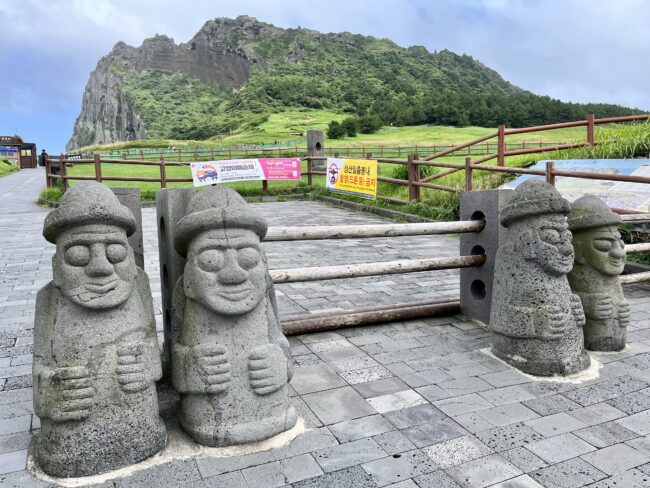
You’ll see little stone grandfathers called dol hareubang all over Jeju. Carved from volcanic rock, they’re traditional guardians said to ward off evil spirits. The island is also famous for its mandarins. They’re delicious, and locals put them in just about everything, from coffee syrup to desserts. You’ll spot the fruit on souvenirs everywhere, too.
🗺️ Save the places you want to visit in Naver Map before setting off.

Flying to Jeju from Seoul or Busan
Seoul Gimpo (GMP) to Jeju (CJU) topped OAG’s 2025 ranking of the world’s busiest air routes by scheduled seats, with about 14.4 million seats that year. We flew from Gimpo to Jeju with T’way Air and continued from Jeju to Busan with Jeju Air. Our tickets to Jeju were inexpensive and the flight went by quickly. On our trip I preferred Jeju Air because we boarded through a jet bridge. With T’way we took a bus to the plane.
✈️ If you arrive in Seoul at Incheon (ICN) and fly to Jeju from Gimpo (GMP), allow time to transfer between airports. Check the airport code on both tickets.
Renting a car on Jeju
Our six-day rental was ₩300,000, plus ₩60,000 for each of the two child seats. We paid ₩420,000 altogether, including both seats, and the airport shuttle was free. I thought that was a great price for nearly a week of getting around with the kids.
We found The Safe Rent A Car through Discover Cars. I expected an average rental office, but we felt like VIPs. It was a short ride on the free airport shuttle, and there was a lounge with a sofa and café while Martin did the paperwork. He even got a free upgrade. Driving on Jeju felt more intense than on the mainland. We kept thinking someone would bump us, and eventually someone did, in a car park.
We used Discover Cars for Jeju and both of our rentals in Seoul. I like having someone to contact if there’s a problem with the rental company, and their support is available 24/7. Check whether your booking includes free cancellation up to 48 hours before pickup. Their Full Coverage worked out cheaper for us than buying cover at the counter. It reimburses eligible charges under its terms, and the rental company can still ask for a deposit.

International Driving Permit and rental documents
Read VisitKorea’s driving guide and check with the authority that issues driving permits in your country and with your rental company before you book. Bring your original International Driving Permit, your original domestic licence and your passport. A friend of mine forgot her IDP and the rental company refused to hand over the car. For more on permits, pickup and what we paid, see our guide to renting a car in South Korea.
Navigation and driving on Jeju
We used Naver Map. Sign in before your trip and save the places you want to visit so you don’t have to look them up from the driver’s seat. We saw lots of speed cameras. We also found that paying for parking with a foreign card could be tricky.
Visiting Jeju without a car
A car suited our seven-day itinerary, but you can use buses and book guided day trips for stops farther apart. Check the pickup point before booking. Jeju City is on the north side of the island, while Jungmun and Seogwipo are on the south. These are alternatives to our self-drive route.
- East coast from Jeju City: an eastern Jeju day trip with Seongsan Ilchulbong and stops around the coast. Check the current itinerary for the cave and village stops before booking.
- Southwest from Jeju City: a day trip to the Jusangjeolli basalt cliffs and O’sulloc tea area. Pick this for coast, scenery and tea.
- From Jungmun or Seogwipo: an eastern Jeju day trip with Seongsan and Micheon Cave. This is a handy option if you’re staying on the south coast. The tours listed here have English-speaking guides. Check the current route and pickup point when you book.
Where to stay on Jeju
We stayed at the Benikea Jungmun Hotel, a three-star hotel with breakfast in the resort area near Jungmun Beach. Jungmun is one of the pricier parts of Jeju. If you want a resort stay, I’d look for a pool and check how the family rooms are set up before booking.
Breakfast was very Korean, and for once I really wasn’t looking forward to the hotel buffet. I’d had my fill of rice and pickled sides. I did appreciate the daily housekeeping with two kids. It was so hot and humid that our laundry barely dried.
My booking tip
Agoda or Booking.com?
Compare the final price for the same room and dates, including breakfast, cancellation terms, payment timing, currency, taxes and fees.
Jeju accommodation map
Use the map to compare Jungmun, Seogwipo and other parts of the island. We stayed in Jungmun all week, which spared us from packing up every day. If you’re relying on guided tours, check their pickup points before booking a hotel. Zoom into the area you want and enter your travel dates.
How to map out your Jeju itinerary
Save your stops in Naver Map and group them by area. Our week covered the northwest beaches, the eastern coast and the south, so we could spend more time out of the car. If your trip also includes Seoul, here’s how we planned our day around the Korean DMZ.
Best time to visit Jeju
I’d choose spring or autumn for sightseeing in milder weather. Summer is good for swimming, but expect heat, humidity, heavy rain and the possibility of typhoons. We enjoyed the sea. The heat and the laundry that never dried were less fun. Keep your days flexible so you can swap a beach or a hike for museums and cafés. Conditions on the coast and in the mountains can differ.
Our 7-day Jeju itinerary
We spent a week on Jeju with two young children and still didn’t see everything. We flew in after a stay in Suwon and carried on to Busan. We stayed in Jungmun and drove out each day. With flights on the first and last days, we had five full days to explore.
| Day | What we did |
|---|---|
| Day 1 | Flight from Seoul Gimpo to Jeju and check-in in Jungmun. |
| Day 2 | A walk in Jungmun, Bunker House café near Seogwipo, Figure Museum Jeju and shopping in Jeju City. |
| Day 3 | Gwakji Beach, then lunch and coffee on Aewol Coffee Street. |
| Day 4 | Bong Bong mandarin farm in Sinrye, Bunker des Lumières, Jeju Coffee Museum Baum and a short walk near Sunrise Peak. |
| Day 5 | Jungmun Five-Day Market, Myeongwol Elementary School café, lunch at Jeju Myeongwol Station (제주명월역), Hyeopjae Beach, Innisfree and its tea fields, Jeju Aerospace Museum and the temples beneath Sanbangsan. |
| Day 6 | Jeongbang Waterfall, an abandoned complex inland, Moregidong Tarzan café in Sanghyo, Seogwipo Healing Forest and Jungmun Beach. |
| Day 7 | Hotel checkout, rental car return and flight to Busan. |
Day 1: Fly from Gimpo and settle into Jungmun
After a week in Suwon, we returned our mainland rental car and flew from Seoul Gimpo to Jeju. We picked up another car and drove to Jungmun, our base for the whole stay. I’d keep the first day for travel and settling in. Having one base meant we could head out without packing our bags each morning.
Day 2: Jungmun, Bunker House and movie heroes
We started with a walk in Jungmun, drove to Bunker House near Seogwipo for coffee and then went to Figure Museum Jeju. The museum has figurines and large models of film and comic-book characters, including Spider-Man and Batman. We ended the day shopping in Jeju City and saved sightseeing there for another trip.
Day 3: A swim at Gwakji and cafés in Aewol
We spent the day on the northwest coast, swimming at sandy Gwakji Beach and heading to Aewol Coffee Street for lunch and coffee. Leave a little time for the coastal walk between cafés. For me, this was what Jeju did so well: a swim, good food and a coffee with a view.
Day 4: A mandarin farm, an art bunker and Sunrise Peak
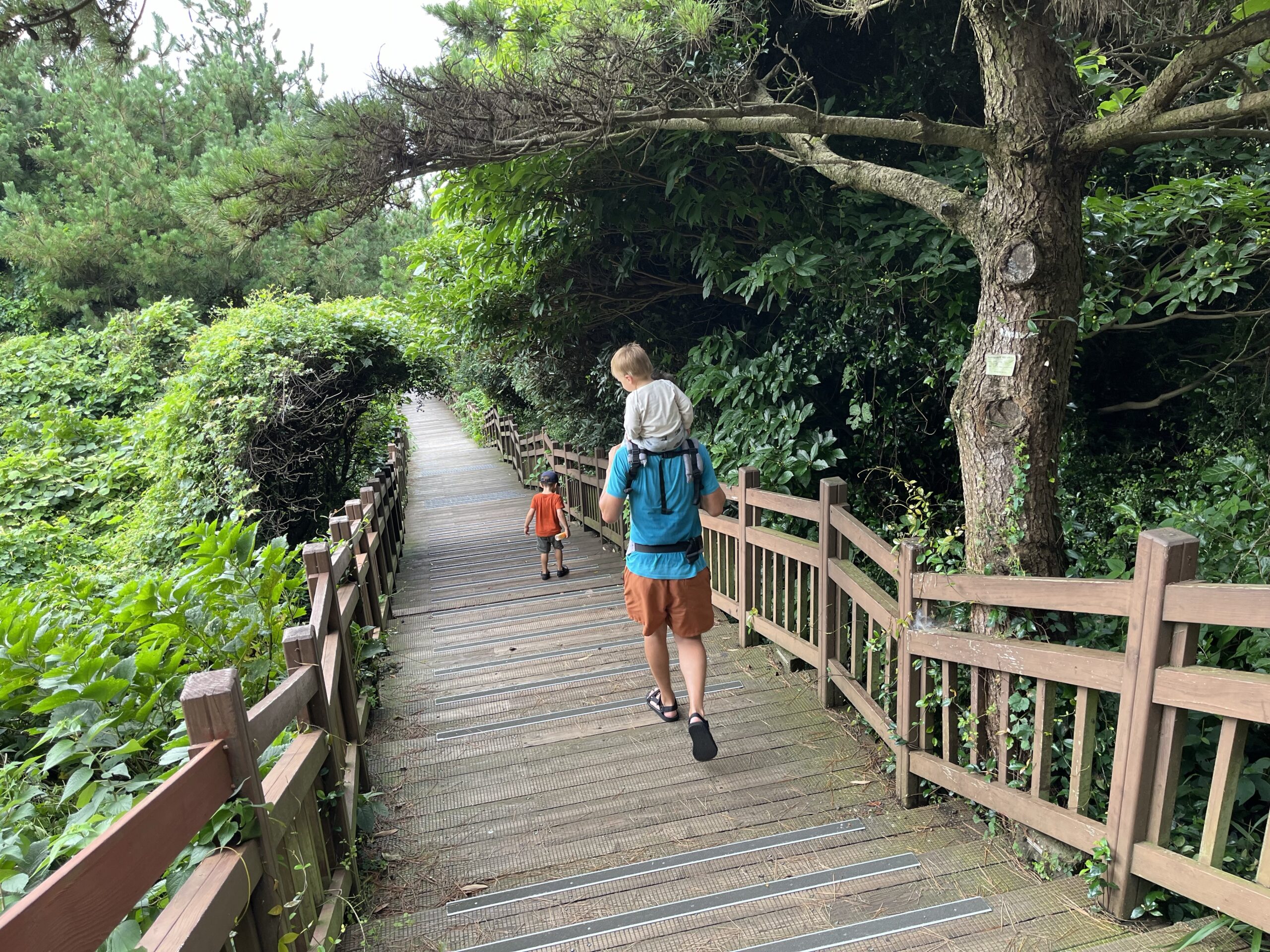
On our way east, we stopped at Bong Bong mandarin farm and its café in Sinrye. Then we visited Bunker des Lumières and the neighbouring Jeju Coffee Museum Baum in Goseong. We spent the afternoon around Seongsan Ilchulbong, also known as Sunrise Peak. The short walk and cliff views were a great way to finish the day.
Day 5: A market, Hyeopjae Beach, tea fields and planes
We visited Jungmun Five-Day Market in the morning, then had coffee at the former Myeongwol Elementary School and lunch at Jeju Myeongwol Station (제주명월역). After coffee and sushi, we went swimming at Hyeopjae Beach. We also stopped at Innisfree and the tea fields, Jeju Aerospace Museum and the temples beneath Sanbangsan with their golden Buddha. This was our busiest day. For a slower pace I’d drop a couple of stops.
Day 6: Jeongbang Waterfall, the interior, a forest and Jungmun Beach
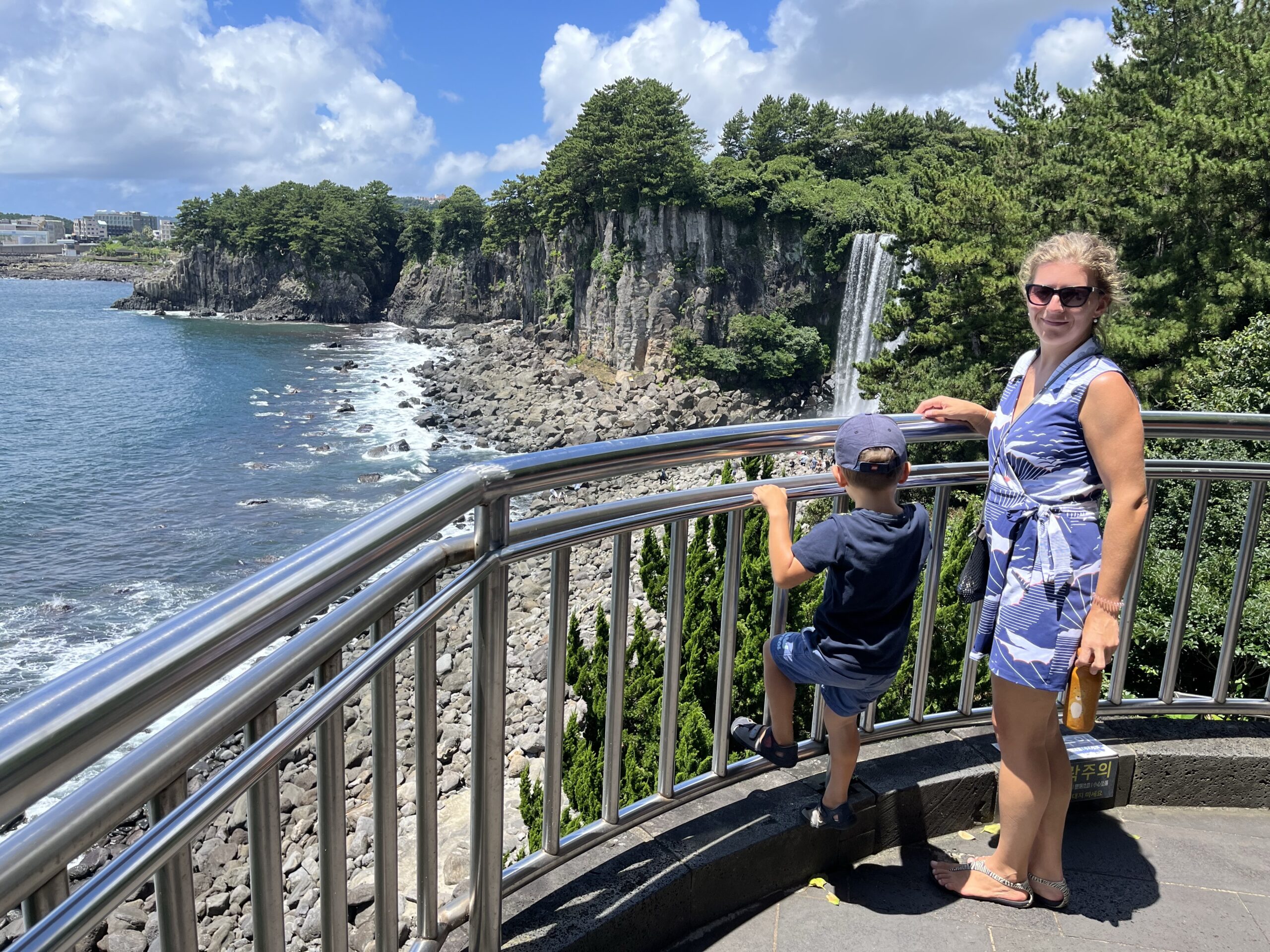
We began our last full day at Jeongbang Waterfall in Seogwipo. We made a detour inland to see an abandoned complex and stopped at Moregidong Tarzan in Sanghyo, a café with tents in its garden. Next came Seogwipo Healing Forest and a swim at Jungmun Beach. We fit in a waterfall, a forest and the sea without driving to the far side of the island.
Day 7: Return the car and fly to Busan
We checked out, dropped off the car and flew from Jeju to Busan. Leave time to return the car and take the rental shuttle, if there is one. I’d only plan a longer outing that morning if the departure time gave us plenty of room.
🗺️ Check opening days before putting the stops in your map, especially if you’re travelling on a Monday.
Things to see and do on Jeju
In a week we saw the coast, a waterfall, forest, museums and plenty of cafés. With two young kids we skipped Hallasan, and the lava cave was closed during our trip. We went to Jeju City for shopping. Check each attraction’s closing day when you plan your route.
Manjanggul Lava Tube
Manjanggul was closed when we went. It reopened on 30 May 2026, and visitors can explore about 1 km (0.6 miles) of the lava tube. It’s an option for the eastern day of our itinerary. The official visitor information lists the first Wednesday of each month as a closing day. Check before you go.
Seongsan Ilchulbong: Sunrise Peak and coastal cliffs
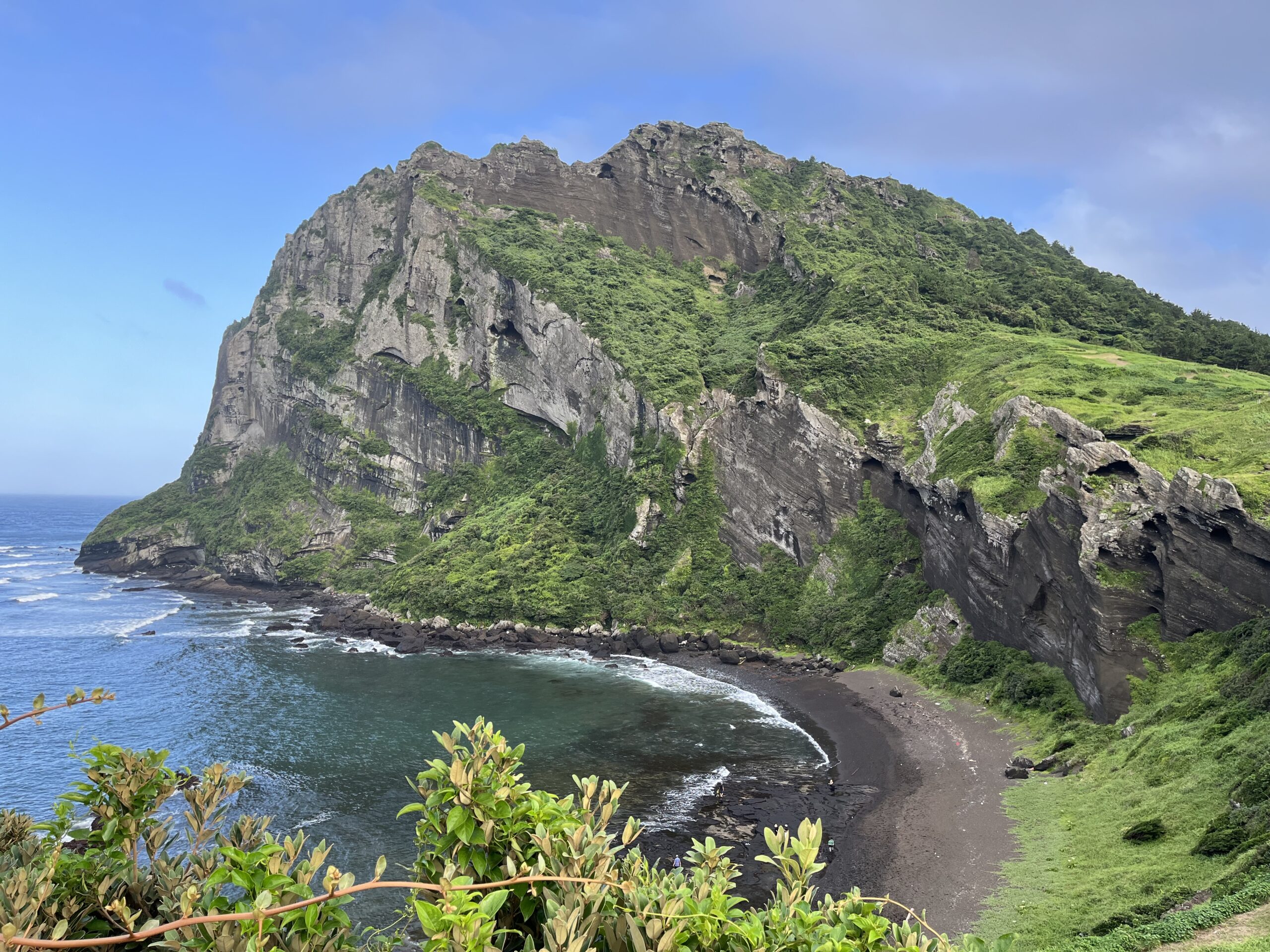
Seongsan Ilchulbong is a volcanic cone on the east coast, with green slopes and steep rock faces above the sea. It’s part of the Jeju Volcanic Island and Lava Tubes UNESCO site. We did a short walk along the coast, where stairs and pathways give you views of the cliffs. You can also take the separate uphill route to the crater viewpoint.
Hallasan: the hike we skipped
Hallasan, South Korea’s highest mountain, dominates the middle of the island. With two little kids we spent our time on shorter walks, beaches and museums. If hiking is a priority, I’d set aside a whole day and shorten the rest of the itinerary. Check routes and access through the national park.
To reach the Baengnokdam summit crater, use the Hallasan reservation system for the upper sections of the Seongpanak and Gwaneumsa trails. Yeongsil and Eorimok do not require summit reservations and end below the crater. Check current trail information for weather and maintenance closures.
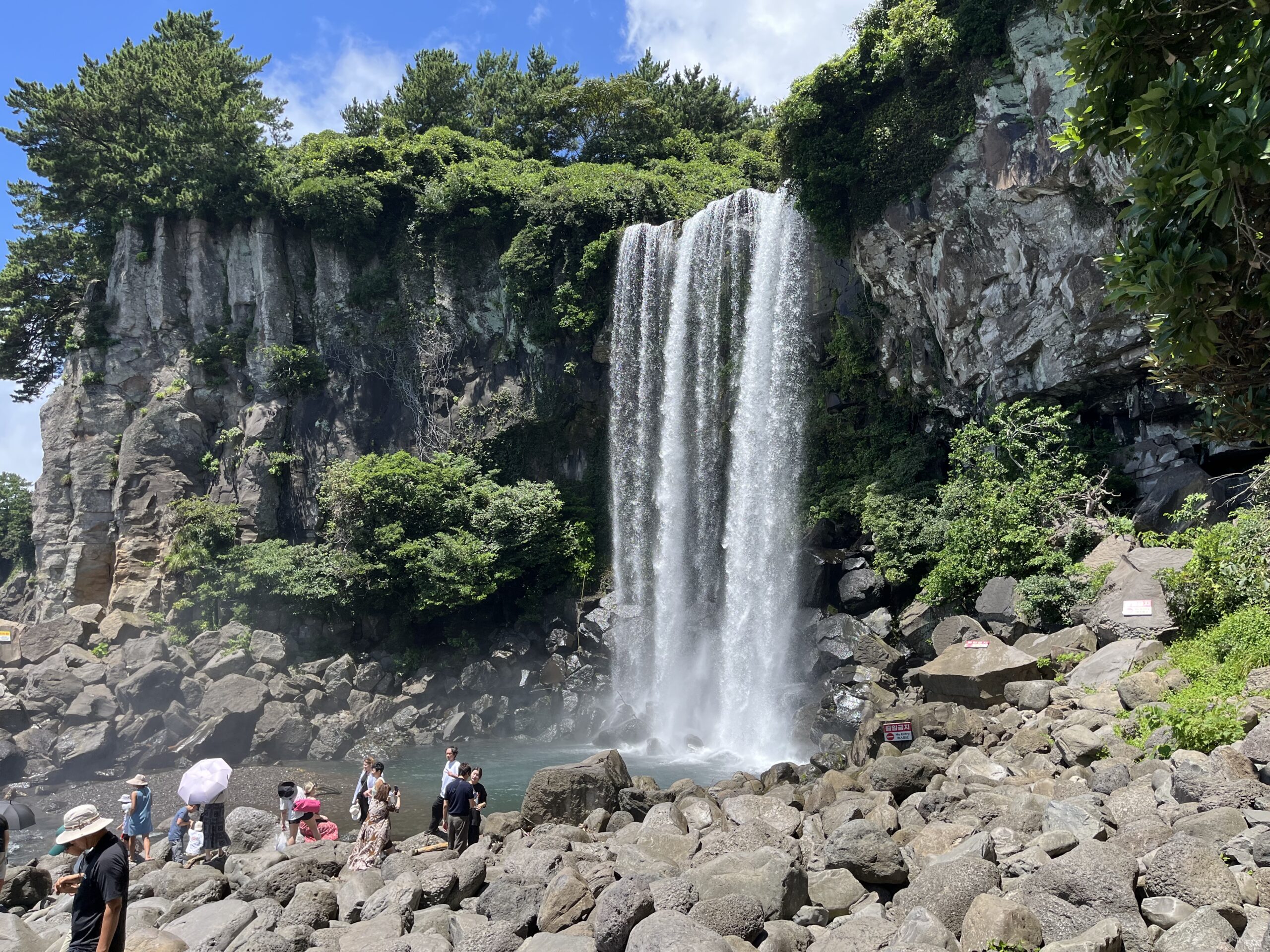
Jeongbang Waterfall in Seogwipo
Jeongbang drops from a dark cliff straight into the sea. It was one of the most striking natural sights on our trip. There are stairs down and big rocks at the bottom. Wear shoes with grip and take it slowly with kids. We combined our visit with a drive inland and an afternoon at Healing Forest. See visitor information for Jeongbang.
An inland detour to an abandoned complex
Between Jeongbang and our café stop in Sanghyo, we took a detour past an abandoned complex. The big buildings had rounded façades and vegetation growing around them. It was a different side of Jeju from the beaches and manicured resort grounds.
Seogwipo Healing Forest
Walking among tall trees and away from the exposed coast made a lovely change. We visited on our last full day. A sign at the entrance said visitors had to wear trainers or hiking shoes, so change out of your beach flip-flops. Check the forest’s booking and visitor information before setting out.
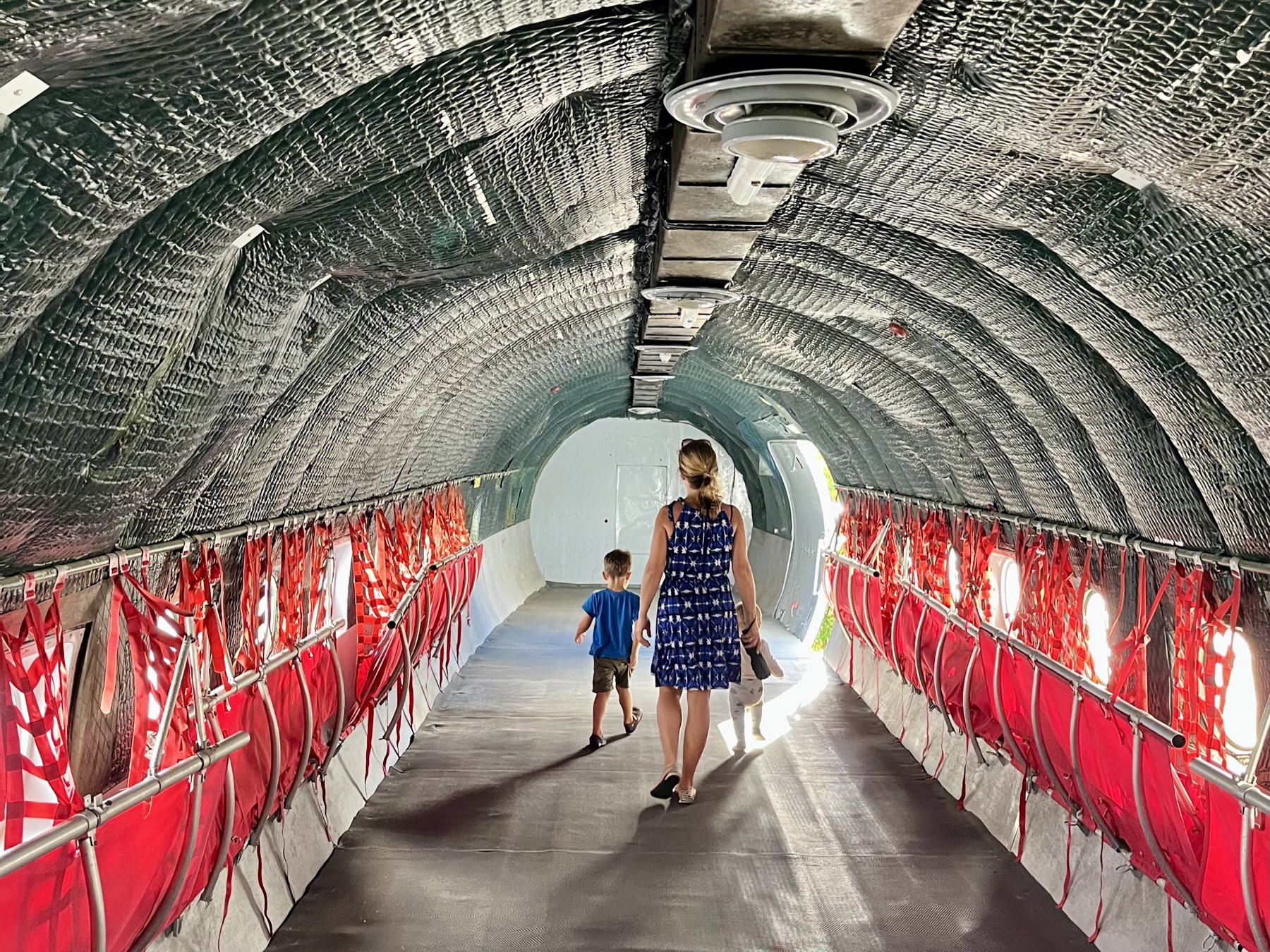
Jeju Aerospace Museum
We paired the Jeju Aerospace Museum with Innisfree and the tea fields in the southwest. There are full-size aircraft inside, displays about aviation and space, and more aircraft outside that you can see up close. It’s a good stop for anyone who likes planes, and handy when you want part of your day indoors.
Bunker des Lumières: art, light and music
Bunker des Lumières is a former communications bunker turned immersive art space. Images are projected all around you and set to music. We combined it with the Baum coffee museum next door and Sunrise Peak. Exhibitions rotate, so check what’s on before you go.
O’sulloc Tea Museum, next to Innisfree
The O’sulloc Tea Museum is beside the tea fields and Innisfree. We visited the fields and the Innisfree shop and café. You can add the museum if you want to learn about Korean tea culture. If tea is what brought you here, give it a bit more of the day.
Bong Bong mandarin farm in Sinrye
Bong Bong is a family-run citrus farm on the south side of Jeju. We stopped at its café on our way towards Seongsan. Mandarins show up everywhere on Jeju, from orchards to drinks and souvenirs, so it was fun to see where they grow. Ask the farm about the picking season if you want to pick fruit yourself.
The golden Buddha and temples below Sanbangsan
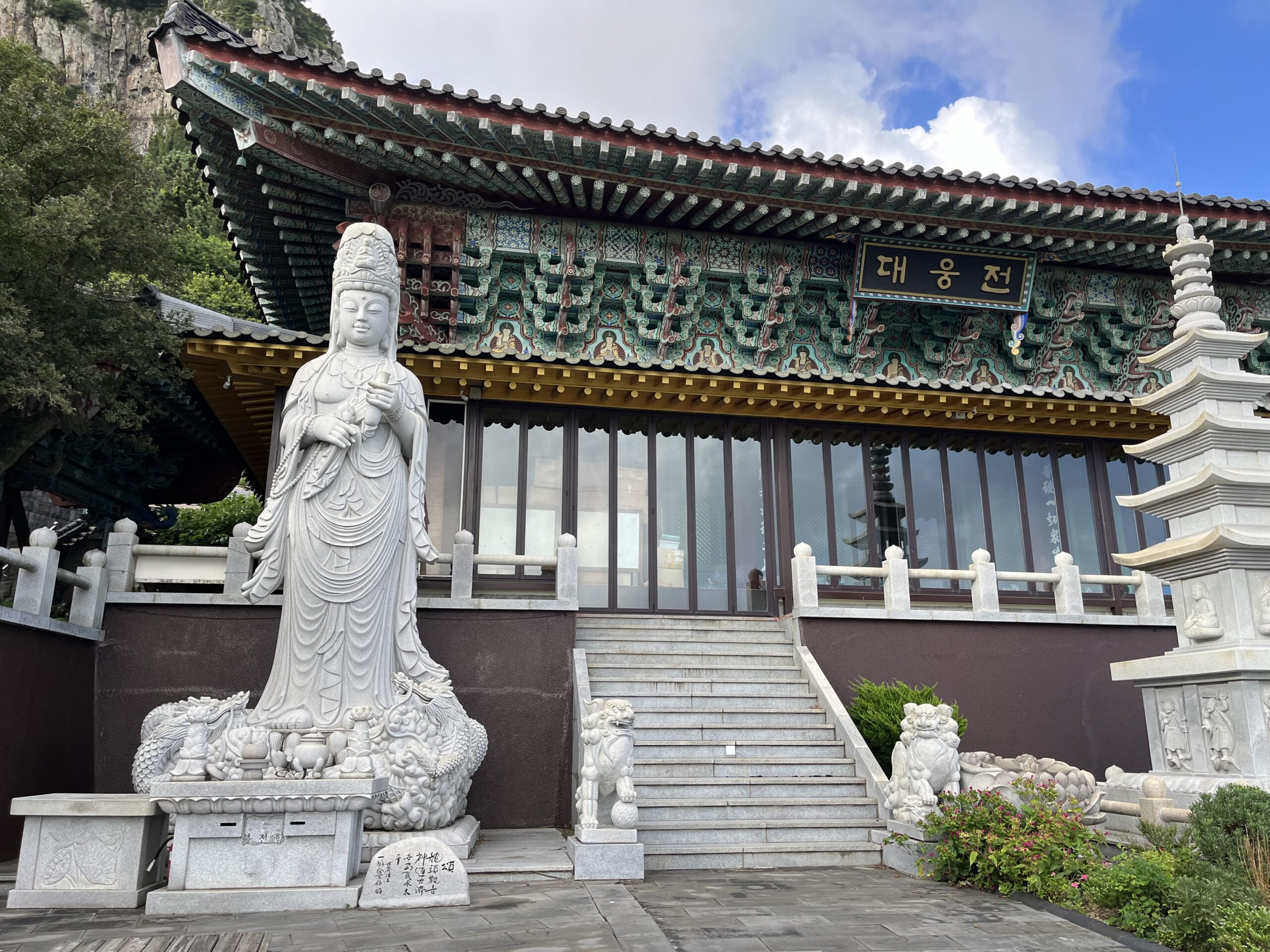
We stopped at the Buddhist temples and golden Buddha below the rocky bulk of Sanbangsan, near Sagye. Think ornate roofs, temple courtyards and green slopes behind them. It makes a good short stop on the southwest coast. If you also want to visit Sanbanggulsa Cave Temple, allow time for the stairs farther up the mountain.
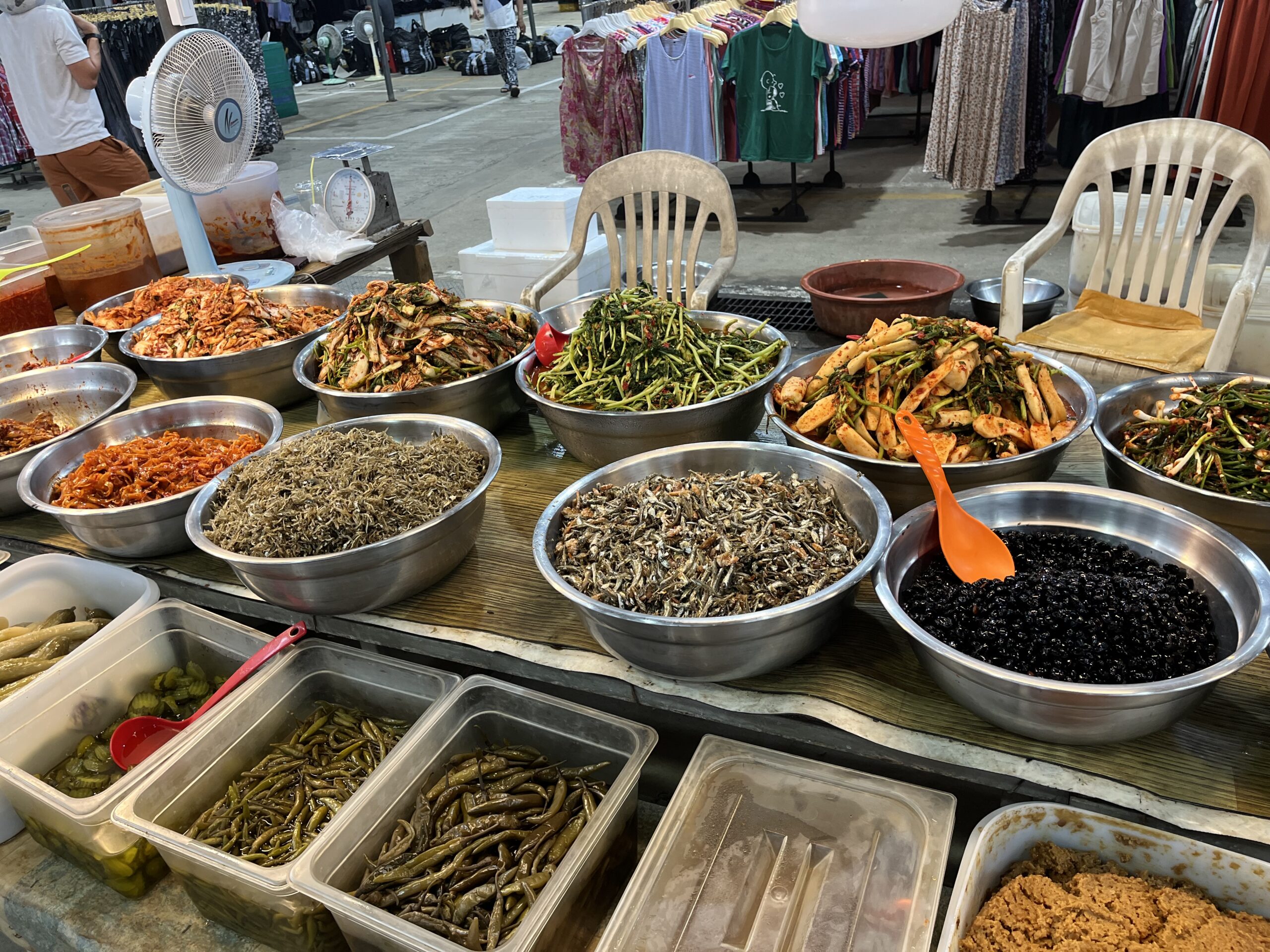
Jungmun Five-Day Market
We wandered past stalls selling fruit, vegetables, fish and prepared food. It’s a good morning stop before heading out. This market takes its name from the interval between market days. Visit Jeju lists the 3rd, 8th, 13th, 18th, 23rd and 28th of each month, so move our fifth day to suit your dates.
Coastal drives and walks around Aewol
Leave time for the coast itself if you’re driving. In Aewol there are black volcanic rocks, sea views and cafés where you can break up the journey. We paired it with Gwakji Beach and lunch. Save Aewol by name in your map. Jeju has several coastal roads.
Figure Museum Jeju: Spider-Man, Batman and more
We called this the Spider-Man museum, but you’ll find Batman and plenty of other characters from films, comics and animation, from tiny collectibles to large models. We went after coffee at Bunker House on our second day, before shopping in Jeju City.
Our favourite beaches on Jeju
We swam at three beaches: Gwakji, Hyeopjae and Jungmun. We paired the northwest beaches with cafés in Aewol or Myeongwol and saved Jungmun for after our forest walk in the south.
For a day of swimming and sightseeing, I’d bring a light towel, a change of clothes and a waterproof phone pouch. Check that it fits your phone and test the seal before you use it. Bring shoes with grip for waterfall steps or trails, and save flip-flops for the beach.
Gwakji Beach: swimming before coffee in Aewol
Gwakji on the northwest coast has pale sand, clear water and dark volcanic rocks around the edges. We spent part of our third day here and then went to Aewol for lunch and coffee. Save it as Gwakji Beach or Gwakji Gwamul Beach in your map.
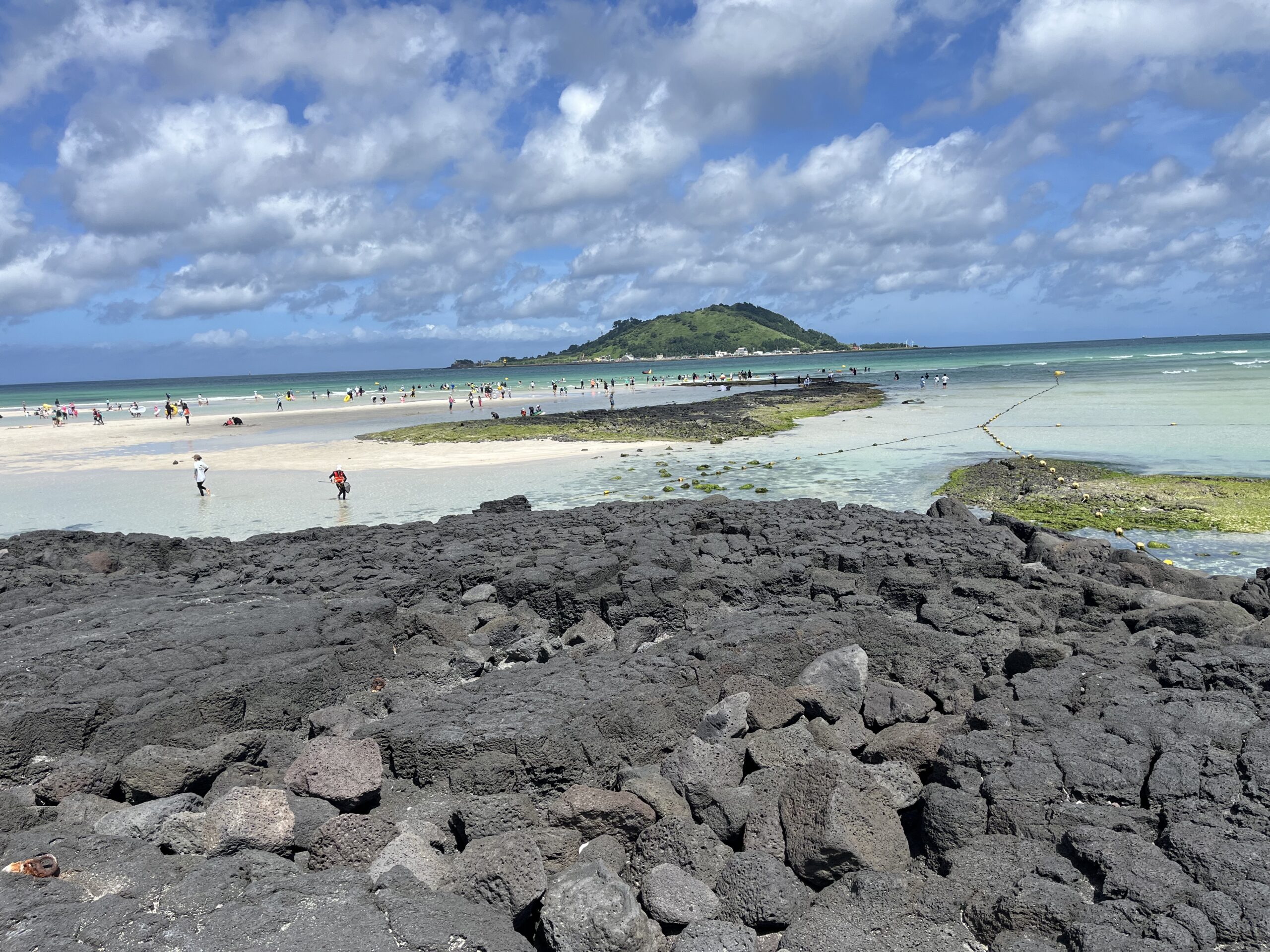
Hyeopjae Beach: turquoise water and views of Biyangdo
We stopped here on our big west-coast day. There’s pale sand, black rock and shallow turquoise water, with Biyangdo Island on the horizon. This is where the Hawaii comparison made sense to me. We came after coffee at the old school in Myeongwol and lunch at 제주명월역. If you want more beach time, drop a later stop.
Jungmun Saekdal Beach: near our base
This sandy beach is on the south coast near where we stayed. We went on the last full day after the waterfall and Healing Forest. It was one more reason Jungmun worked well for us as a base. Watch the marked swimming areas and follow lifeguard instructions, especially if you’re with kids. Conditions vary with weather and surf.
Our favourite cafés on Jeju
Coffee stops were part of our days out. We found cafés by the sea, in an old school, on a mandarin farm and in a garden with tents. Pick one that’s already on your route.
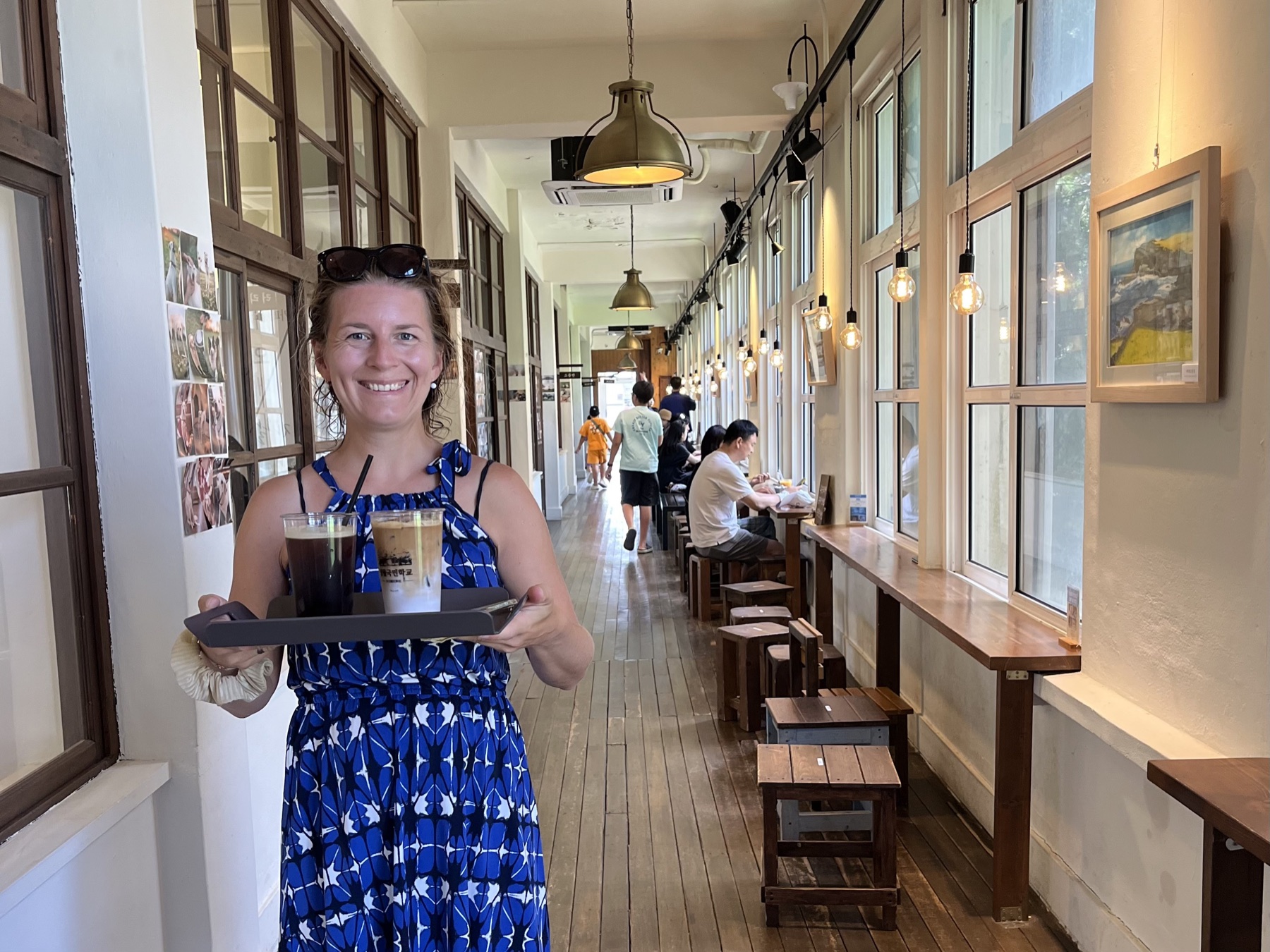
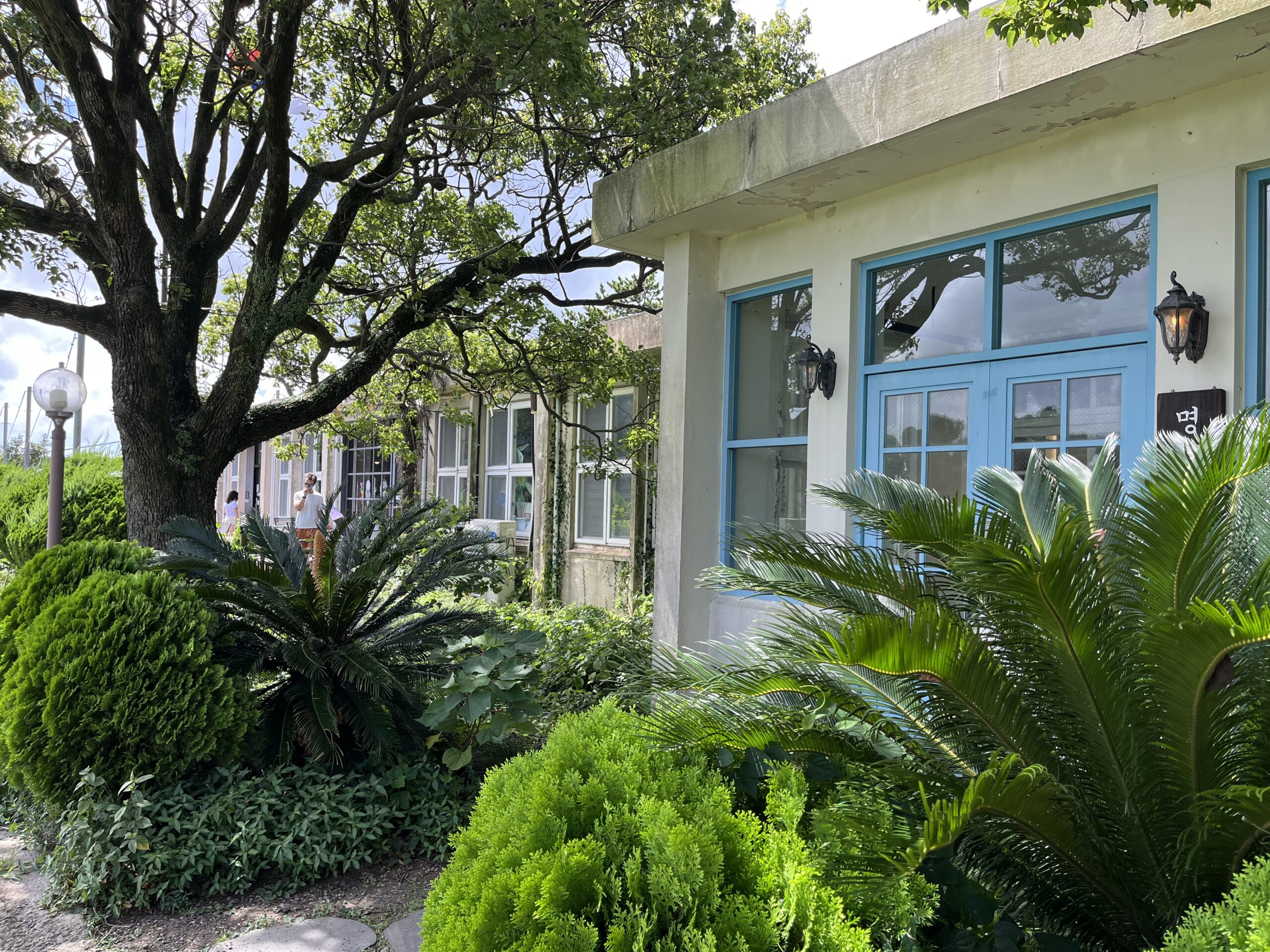
Myeongwol Elementary School café
The former elementary school still has its long corridor, big windows and recognisable school layout, with a café and gallery inside. We went for coffee, had lunch at Jeju Myeongwol Station (제주명월역), and then went swimming at Hyeopjae. All three worked nicely as part of our west-coast day.
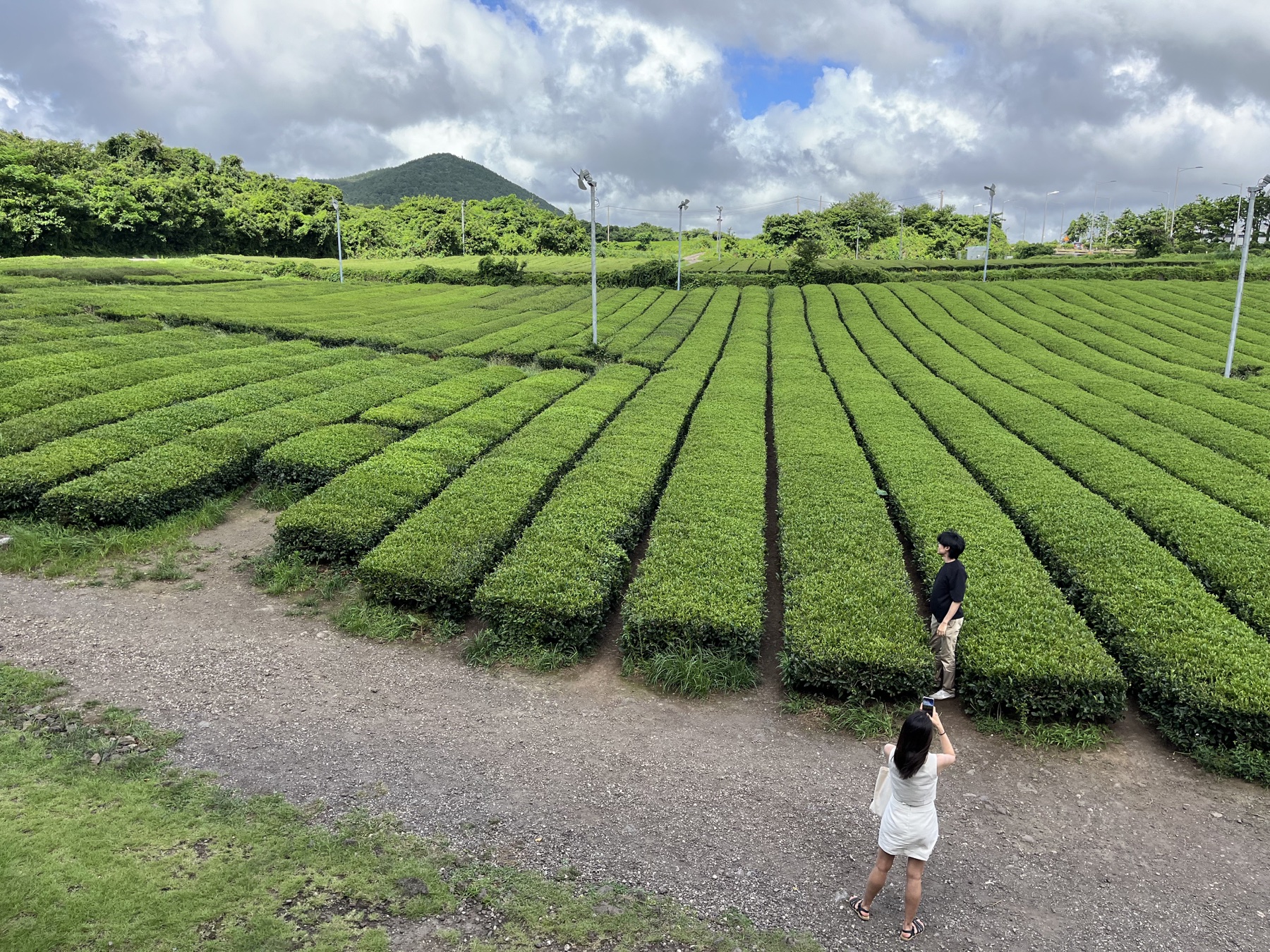
Innisfree Jeju House and the tea fields
Innisfree Jeju House combines a skincare shop and café next to the tea fields. We stopped there and walked around the tea plants. You can add the O’sulloc Tea Museum next door. We paired this stop with Jeju Aerospace Museum, which is nearby.
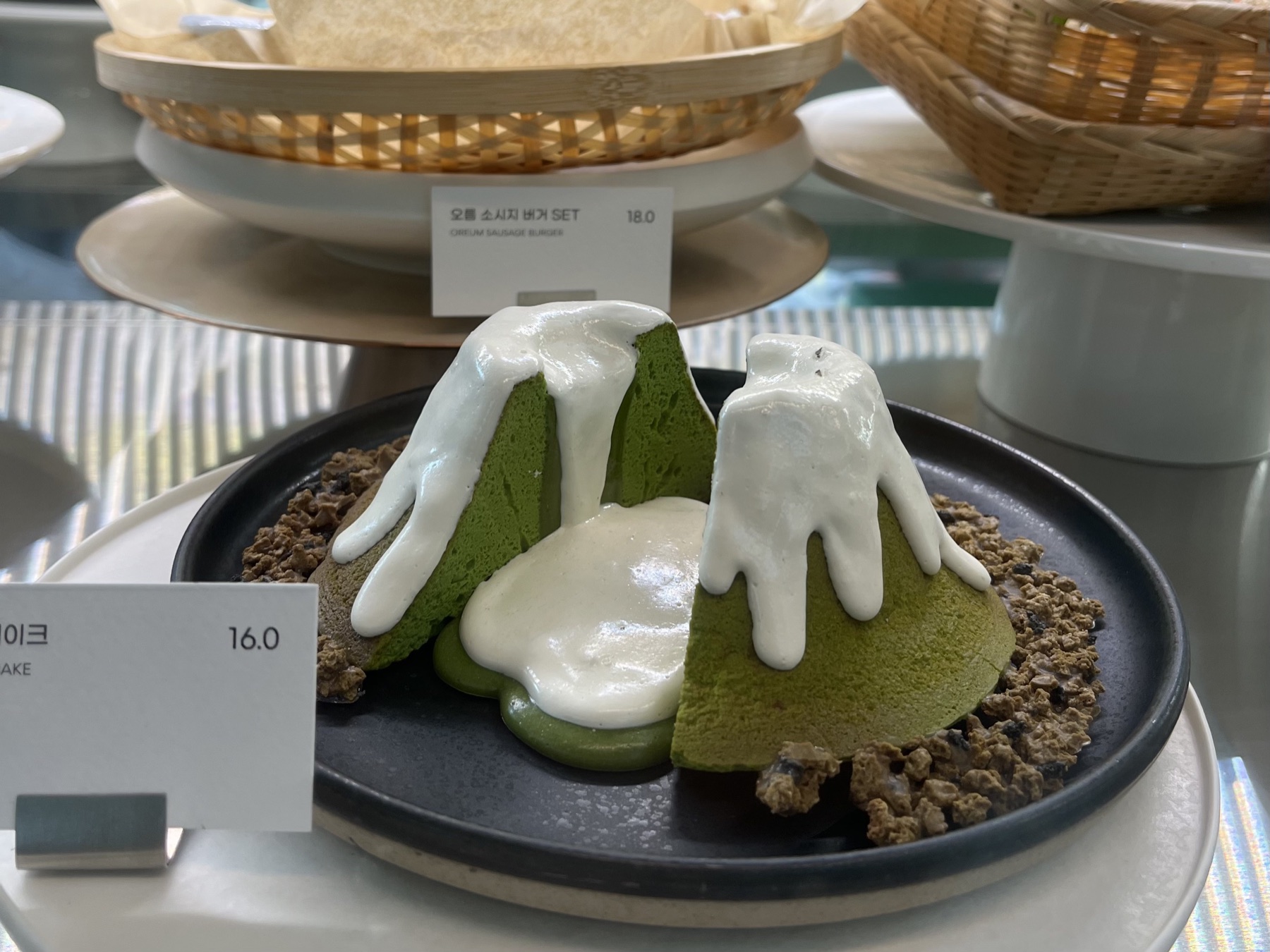
Bunker House and sea-view cafés in Aewol
We stopped for coffee with a sea view at Bunker House near Seogwipo, in a curved, bunker-like building with big windows facing the coast. We also stopped on Aewol Coffee Street after swimming at Gwakji. Bunker House is the café on the south coast, while Bunker des Lumières is the art exhibition in the east.
The café at Bong Bong farm
We visited the café at Bong Bong mandarin farm in Sinrye on our way east. This is a nice place to pair an orchard visit with coffee. Look out for local citrus in drinks and desserts. If you want to pick fruit, check the season with the farm.
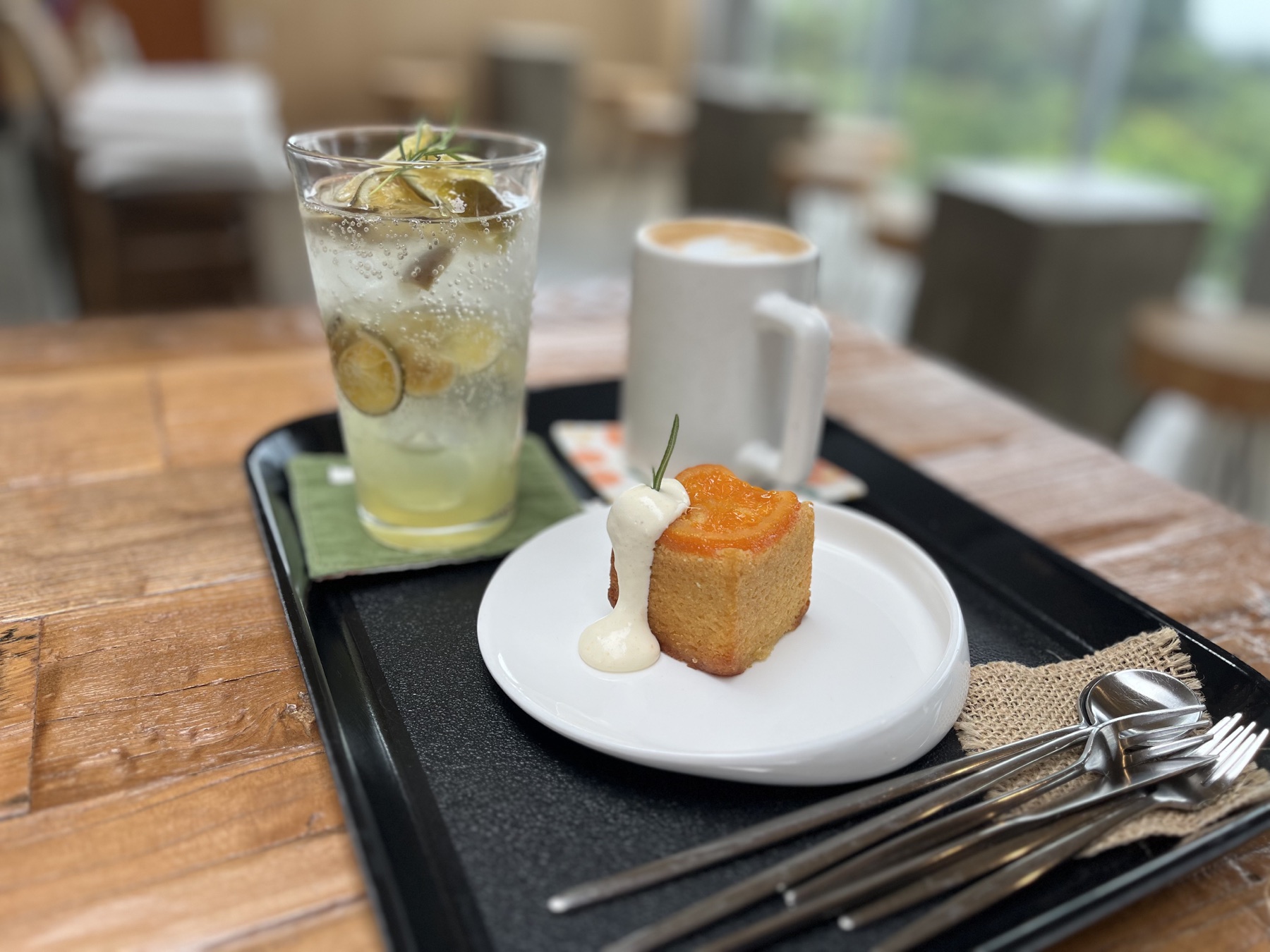
Moregidong Tarzan: a café with tents in the garden
We stopped at Moregidong Tarzan in Sanghyo between Jeongbang Waterfall and Healing Forest. There were tents and seating in the greenery, and a glassed-in space filled with plants. When looking it up, try Oran Garden (오렌 정원), the name used by the NOL travel guide.
Jeju Coffee Museum Baum
We visited the coffee museum at Baum next to Bunker des Lumières. There’s a museum and a café with views of the greenery. It works well as a stop before continuing to Seongsan Ilchulbong. Use the full name, Jeju Coffee Museum Baum, when you look it up.
Where we ate on Jeju
We found plenty of restaurants and also ate cheaply at convenience stores such as 7-Eleven, emart24 and CU. Many have a microwave and a place to eat what you’ve bought.
Seafood and mandarin coffee
We stumbled across a restaurant with three cosy floors, good seafood and a Western-style omelette, which I was very ready for by then. My coffee had mandarin syrup at the bottom of the cup. The only thing I regretted was having no room for mango bingsu, a Korean shaved-ice dessert often served with fruit or sweet red bean paste.
Bubu’s Kitchen (부부키친): a Japanese roadside restaurant
We spotted Bubu’s Kitchen from the car, doubled back and within five minutes it was full. The food came quickly and the noodles were excellent.
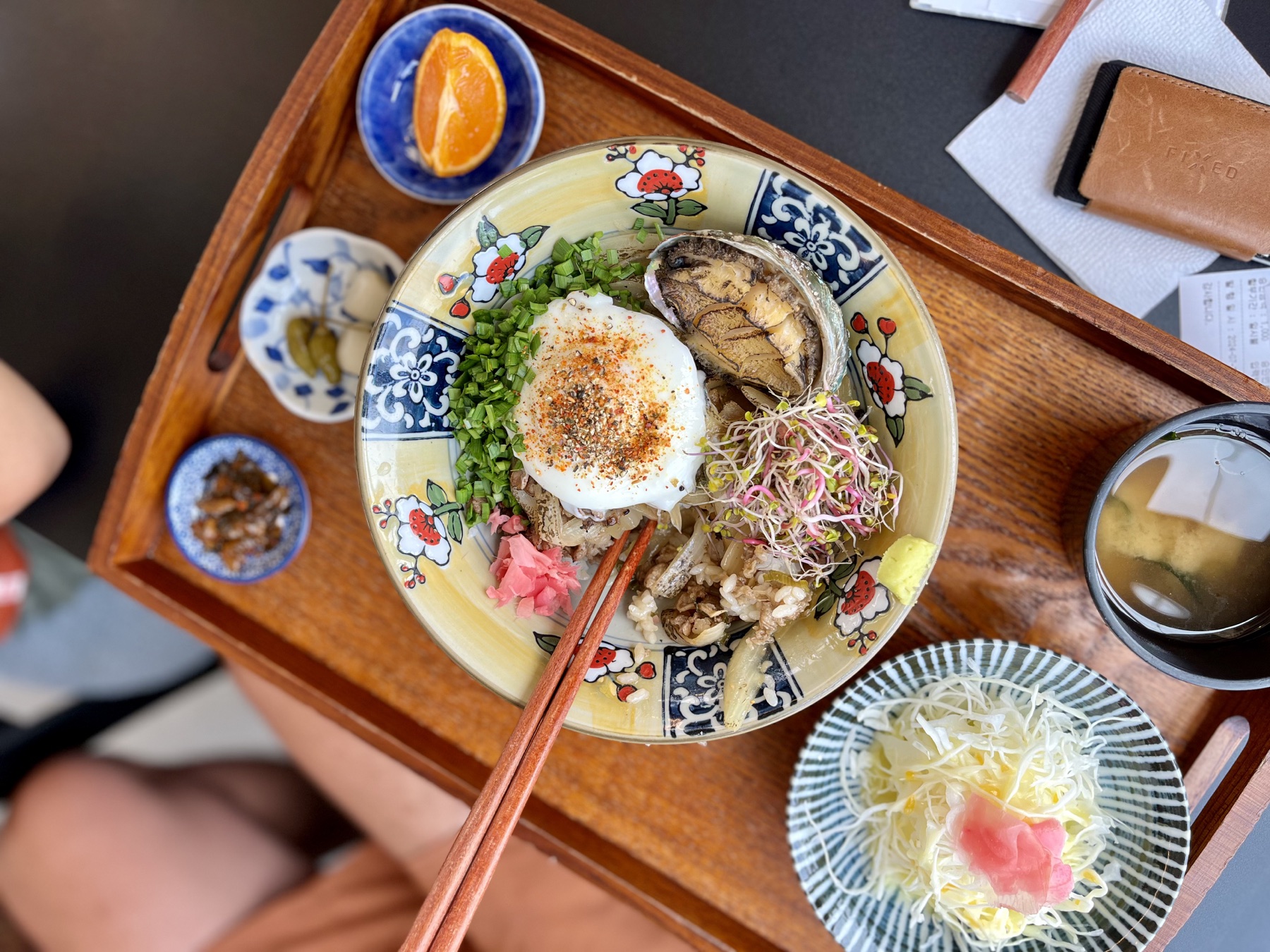
Yakitori Takibi (야키토리 타키비): an izakaya in Jungmun
We fancied a Japanese-style izakaya and tried Yakitori Takibi near our hotel. You can order a set with little courses that arrive as they’re cooked, such as chicken hearts, skewers and seafood. It was delicious. So was the Japanese beer, although it was pricey.
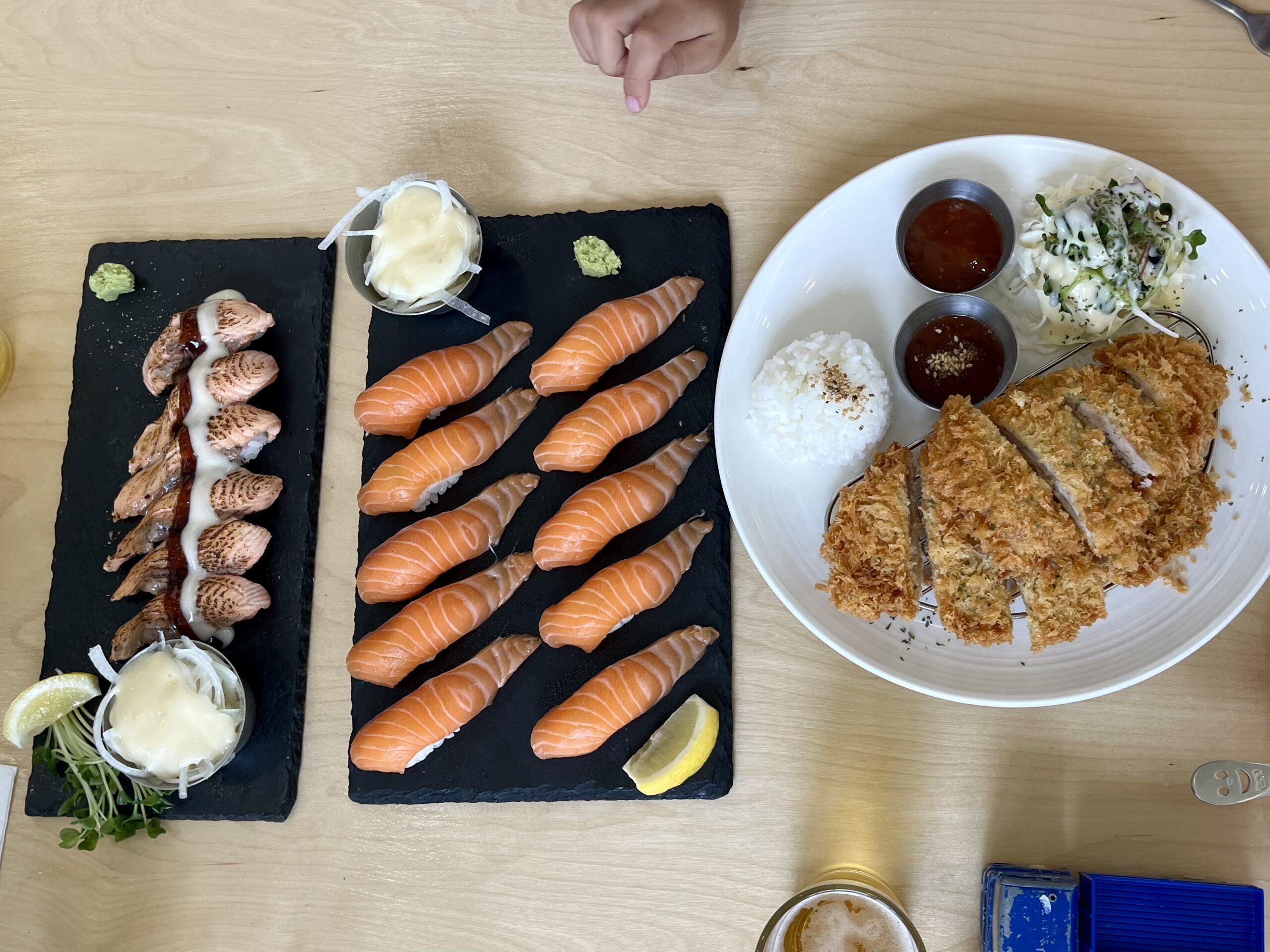
Jeju Myeongwol Station (제주명월역): sushi after coffee
After coffee at Myeongwol Elementary School, we stopped here for lunch before the beach. The two-storey building had a café upstairs and a sushi restaurant downstairs, with a view towards the coast. We ordered sashimi, rice and Korean-style cutlets for the kids, then spent a little time in the garden.
Also heading to Seoul? Read my guide to visiting the Korean DMZ from Seoul.
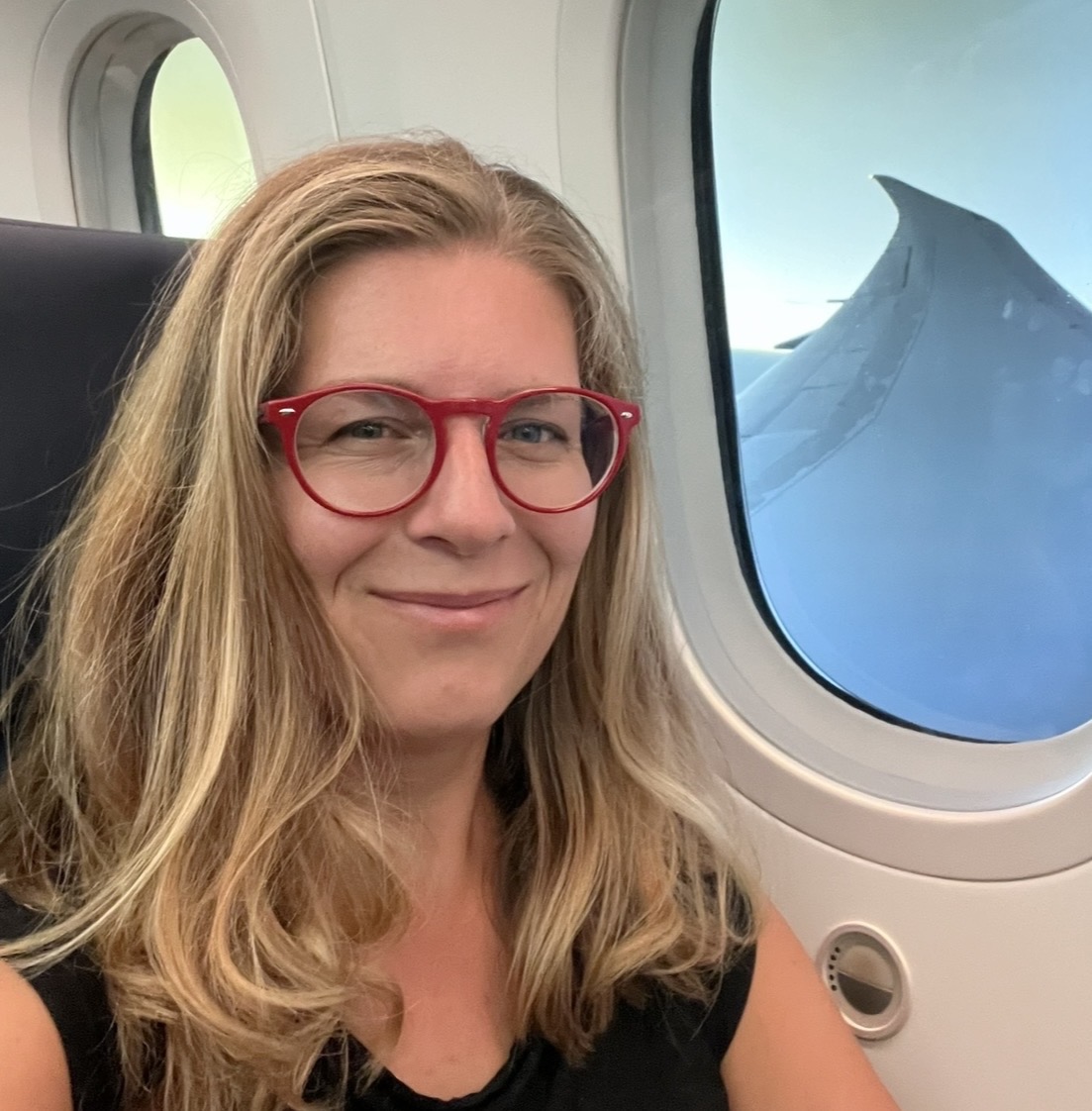
I started travelling after finishing secondary school in 2005. Since then, I have studied in New Zealand and lived in Malta, Madeira, Brittany and Porto. I speak English and French, some Portuguese and very basic Chinese. I travel with hand luggage only and used to stay through Couchsurfing; these days, I use HomeExchange. I travel with my two children. Professionally, I am an agile coach, and I also perform improvisational theatre. Read more about me and my work as a Czech travel influencer.