
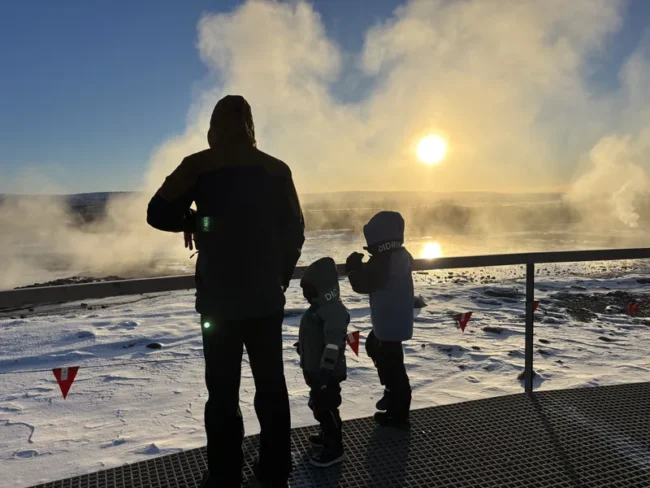
We went to Iceland with our two children for just three days, and even in that short time we saw beautiful waterfalls, a geyser, a crater and a glacier. Our return flights from Wrocław cost about €78 per person, and thanks to HomeExchange we paid nothing per night for accommodation. We didn’t want long hikes, so we chose places that were fairly easy to reach from the car. Here’s what worked for us as a family.
Our route covered the Golden Circle and the south coast. We stayed in one place in Laugarvatn and drove somewhere different each day. It was seriously cold, down to -16°C on one day, so we were very glad of our proper winter clothes. Below is our three-day itinerary, the practical things we learned and a few places I’d saved but we didn’t have time for.
🏠 Our money-saving tip: we stayed through HomeExchange without paying nightly accommodation charges. Use our referral code martin-cc28e when signing up. The service has a paid annual membership, and exchanges can be reciprocal or arranged using GuestPoints.
Our Iceland with kids itinerary at a glance
| Day | Our route | What worked with the kids |
|---|---|---|
| Day 1: arrival | Keflavík → Blue Lagoon / Perlan → Strandarkirkja → Laugarvatn | Splitting up for different activities, a short coastal stop and grocery shopping for the next few days. |
| Day 2: Golden Circle | Gullfoss → Geysir and Strokkur → Kerið → Þingvellir | Starting with the furthest stop and choosing walks close to the car parks. |
| Day 3: south coast | Sólheimajökull → Dyrhólaey → Kvernufoss → Skógafoss | Choosing a handful of stops. We skipped Reynisfjara and the plane wreck. |
This is a short trip around southwest and south Iceland, rather than a drive around the whole island. It was enough for a first taste, and we saw so many beautiful places. In winter, allow extra time for driving and the short daylight hours. In summer you can keep exploring into the evening, while snow, ice or strong winds may mean dropping a stop.
Where to stay: our base in Laugarvatn
We stayed in Laugarvatn, opposite the Fontana geothermal baths, for the whole trip. We arranged our accommodation through HomeExchange and didn’t pay nightly charges. For me, home swapping is a brilliant way to save money even in an expensive destination. You don’t pay a standard rate for each night, but you do need a paid annual membership and an agreed exchange, either reciprocal or using GuestPoints.
If you’d like to try it, our referral code is martin-cc28e. Having one base worked well for three days, as we didn’t have to keep packing and moving. The Golden Circle was close by, and we visited the south coast on a longer day trip. If you want to continue as far as Jökulsárlón, stay further east for part of your trip.
Flying to Iceland and renting a car
We flew from Wrocław in Poland with hand luggage only. Return flights cost about €78 per person, or €311 for the four of us. We parked at the airport and used its lounge, which was small but really pleasant. Our outward flight took about four hours, with a headwind, and the return was around three hours and twenty minutes.
For international arrivals, look for Keflavík Airport (KEF). Icelandair connects it with cities across Europe and North America; routes and seasonal frequencies vary, so use its flight schedule to find your departure airport. Reykjavík city airport (RKV) mainly serves domestic routes. Our flight from Poland was our own route, rather than the only way to follow this itinerary.

🍸 We enjoyed the airport lounge in Wrocław before our flight. It was small but very pleasant. Check whether your payment card or lounge membership includes access at your departure airport, as benefits depend on your own card and programme.
We rented from Sixt for €95 for four days. Collection at Keflavík Airport was incredibly quick. After baggage reclaim, we went to the desk, picked up the keys and collected the car from the car park next to the airport. We brought our own child car seats with us. If you’re doing the same, protect them carefully for the flight and check your airline’s rules for carrying them.
Having a car made this route much easier, as we could adjust each outing to suit the children and the weather. To rent a car, I recommend DiscoverCars. Compare the total price including insurance and read the conditions of the particular rental offer. Before a longer drive, check road conditions, the weather and SafeTravel alerts. A 4×4 alone doesn’t mean every road is safe to drive.
Day 1: Blue Lagoon, Perlan and seals at Strandarkirkja
Blue Lagoon for me, Perlan for Martin and the kids
We split up after landing. I went to the Blue Lagoon, while Martin took the children to Perlan in Reykjavík. Among its attractions is a man-made ice cave built from real ice and snow. I think it’s a great way to introduce children to Iceland’s icy landscapes if you aren’t planning a trip into a natural glacier cave. The kids had their own adventure, and I got to enjoy the geothermal pools.
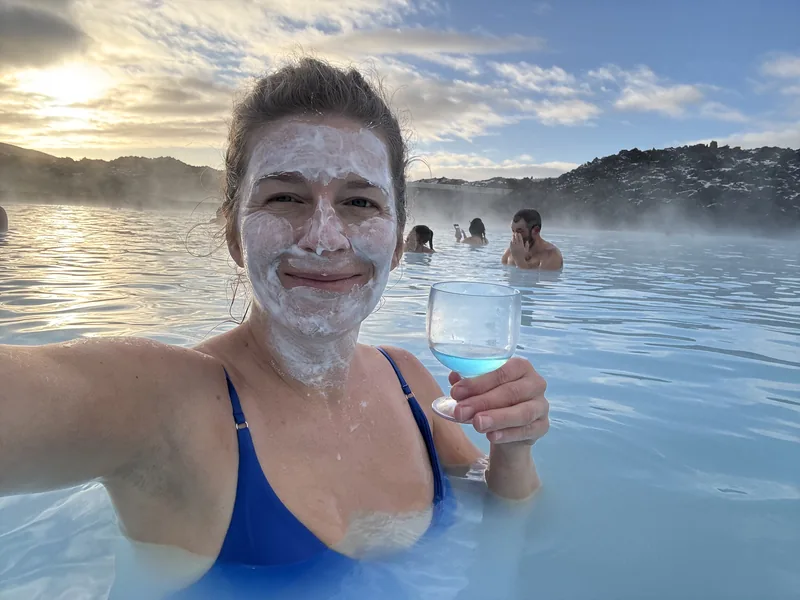
My Blue Lagoon admission cost approximately €143. Choose your ticket and time slot before heading there, and check the Blue Lagoon website for access updates. At Perlan, prices depend on children’s ages. According to its visitor information, children aged four and under enter free, and there is free parking outside the building.
Strandarkirkja: a lovely little church and seals in the sea
On our first day, we also stopped at the little church of Strandarkirkja. It was beautiful, and we even spotted seals in the sea just off the shore. This was such a lovely stop along the way, without needing a long walk. Of course, you can’t count on seeing wildlife, but we were lucky. Afterwards, we bought groceries at Krónan and continued to our base in Laugarvatn.
Day 2: the Golden Circle, Kerið crater and Þingvellir
Gullfoss: a beautiful waterfall at -16°C
We started with our furthest stop, Gullfoss. The waterfall is absolutely beautiful, and you don’t need a long hike to see it. You can walk to the viewpoints from the car park, with steps leading down along part of the route. That suited us with the children, even though it was -16°C. There’s a restaurant, café and souvenir shop at the waterfall. I picked up a coffee before we carried on.
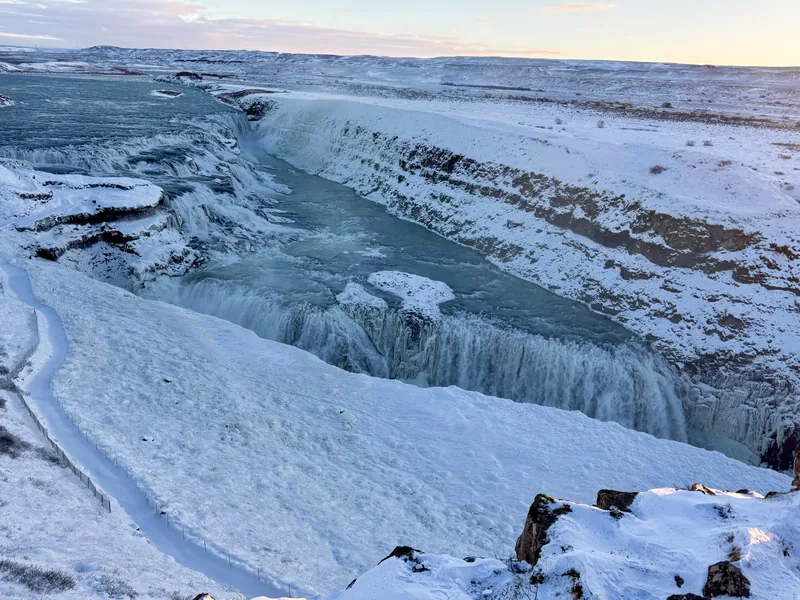
In winter, be prepared for icy surfaces and follow the open paths and barriers. A viewpoint being close to the car park doesn’t mean it’s equally accessible in every kind of weather. We alternated these shorter stops with drives between them. That let us see plenty without spending hours at a time outside in the freezing cold.
Geysir and Strokkur: a geyser a short walk from the car
Next we drove to the Geysir geothermal area, where Strokkur erupts regularly. You park, walk a short distance and wait for the next eruption. This was another easy stop with the kids, without a long trek. We explored the area and then had something to eat. Stay on the marked paths around the hot springs and keep children close, as this water is not for bathing.

Lunch at Geysir Glíma Restaurant
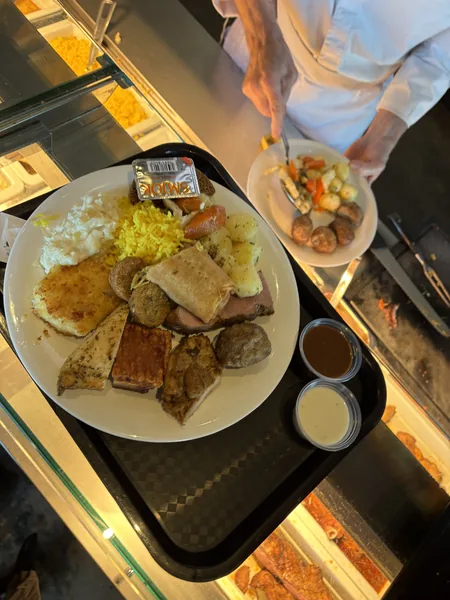
We chose between a bistro and a restaurant near the geysers. At the bistro, I mainly noticed fast food costing around ISK 3,000 to 3,500. We ended up at Geysir Glíma Restaurant. I had a plate of different treats including lamb steak, and we also ordered meatballs with a side. The portions were so generous that two meals fed the whole family. Water was freely available, and our whole lunch cost about €51.
Kerið: a walk around the crater
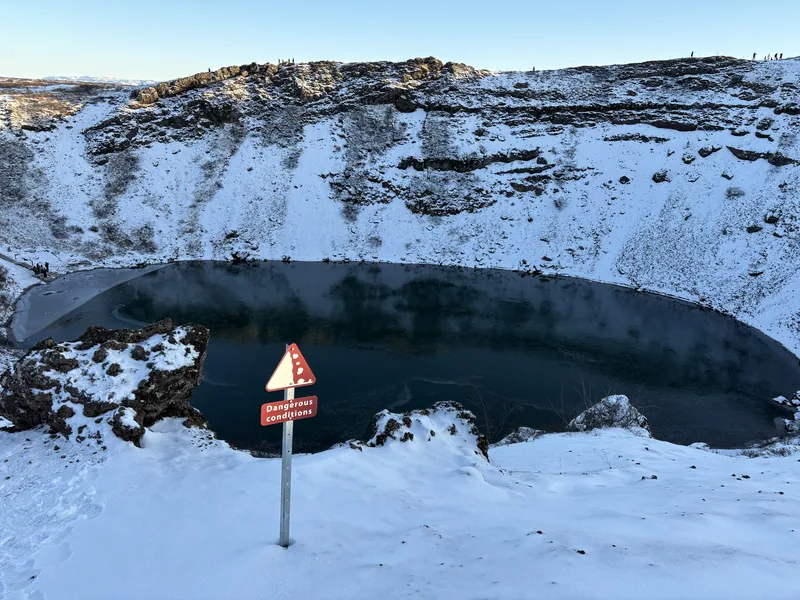
Our next stop was Kerið crater. We paid ISK 700 per adult, and the children were free. We walked around the crater, which gave us another completely different view of Iceland’s landscape. This time, we took turns staying at the car with Bruno. That’s another way to make sightseeing work with children. You don’t have to do absolutely everything together at every stop.
Þingvellir: a short visit from Hakið car park
Our final stop was Þingvellir National Park. We’d been debating whether to keep going, but eventually chose Hakið, P1 car park. There’s a beautiful view just a short walk from the car, and you can wander a little further from there. The park is large and has several places to visit, so choose a particular area for a short stop. This viewpoint was just right for us at the end of the day.
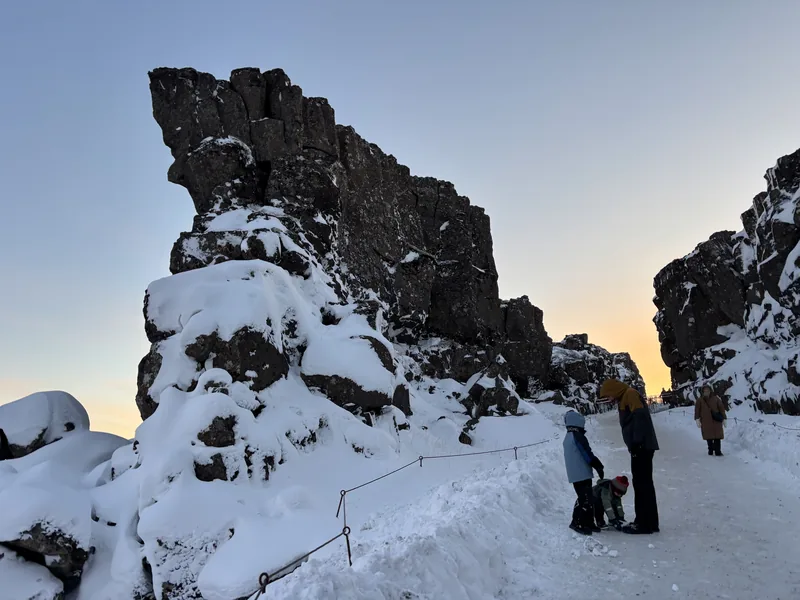
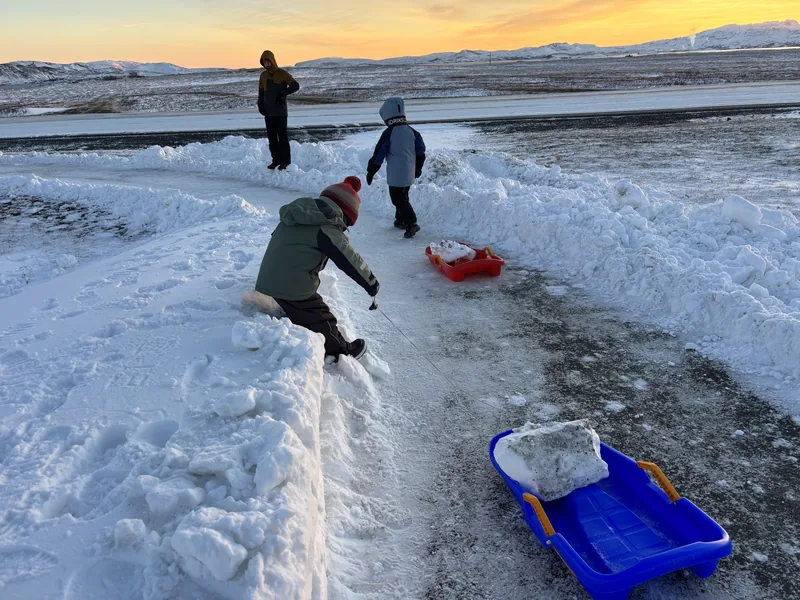
We didn’t have time for Öxarárfoss waterfall or any longer walks. If you want to explore more on foot, allow a larger part of the day and check trail conditions, as not all paths are maintained in winter. We headed back to our accommodation in Laugarvatn. The children still had time for a little sledging in the snow before bed.
Day 3: Sólheimajökull, Dyrhólaey and waterfalls
Sólheimajökull: seeing a glacier without a long hike
In the morning, we drove just under two hours towards Sólheimajökull. We chose this stop partly with the children in mind, as you can walk from the car park to a glacier viewpoint without a full-day hike. It was fascinating, and completely different from the previous day’s waterfalls and geysers. We went to look at the glacier, but we didn’t walk onto the ice. A walk to a viewpoint and a guided glacier hike are two different experiences.

The walking distance changes as the glacier retreats, so don’t expect to step out of the car right next to the ice. Stay on the visitor path and don’t enter the glacier without a guide and proper equipment. If you want a guided glacier hike, check the age limit and departure point of the specific tour. For example, the Glacier Walk Express accepts children from eight, but starts in Skaftafell, much further east, rather than at Sólheimajökull.
Dyrhólaey: the lighthouse, beautiful views and strong winds
Since we were in the area, we drove up to the lighthouse viewpoint at Dyrhólaey. We paid for parking, got out and enjoyed the beautiful coastal views. It was incredibly windy, though. In the end, we decided not to drive down to the famous Reynisfjara beach. The view was enough for us, and time was limited, so we carried on to our next stops instead.
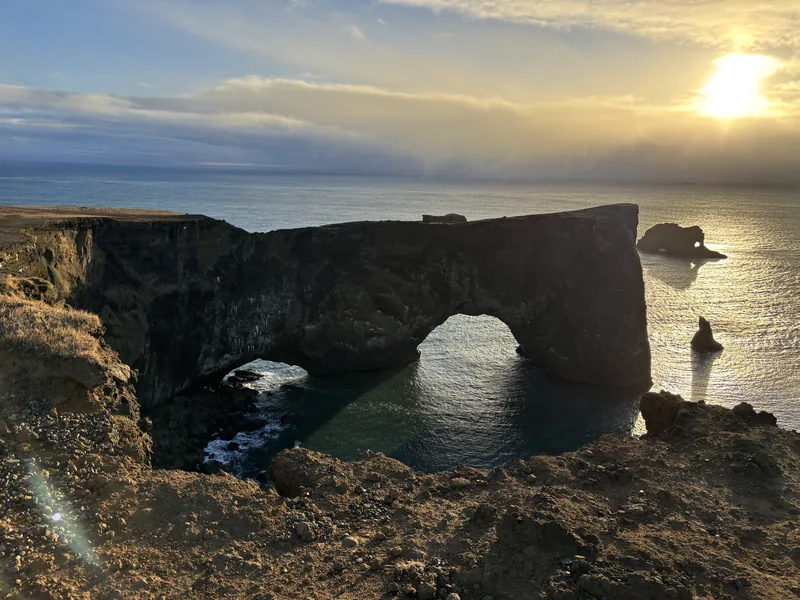
If you visit Reynisfjara, this isn’t an ordinary beach where children can play by the water. Dangerous sneaker waves can reach much further up the shore than you might expect. Follow local warnings, closures and SafeTravel guidance. We didn’t go down there with the children. I’d also planned to visit Víkurfjara beach in Vík, but we left that for another time too.
Why we skipped the Sólheimasandur plane wreck
I considered visiting the plane wreck, but we decided to skip it. It isn’t right by the car park: the walk is about four kilometres each way and takes roughly two hours in total, before allowing much time at the wreck itself. Alternatively, a paid shuttle takes around 10 to 15 minutes. The operator includes the return journey, with a scheduled time to come back.
Allow around ISK 3,200 per person for the shuttle, depending on the seller’s offer. The advertised departures run between 10am and 5pm, but the last one depends on daylight, so confirm both your outward and return times for your day. There’s no shelter from the wind on the open plain. We chose another waterfall instead of this longer stop, which suited our short trip better.
Kvernufoss: a beautiful waterfall on a short walk
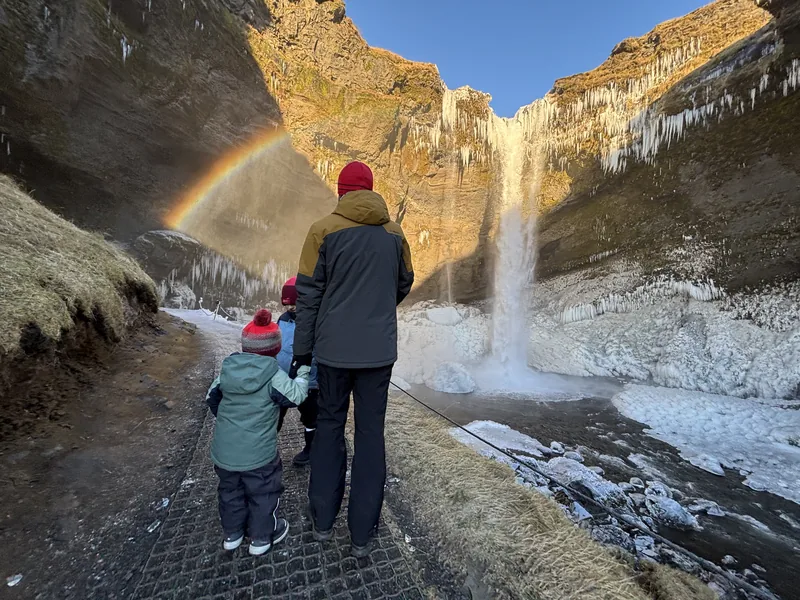
We walked about 800 metres from the paid car park to Kvernufoss. The waterfall was beautiful and a lovely addition to our day. It’s a little more of a walk than a viewpoint just beside the car, but still didn’t require a long hike. Other visitors come here too, so don’t expect to have it all to yourself. For us, it was definitely worth stopping.
Skógafoss: a powerful waterfall and a viewpoint above
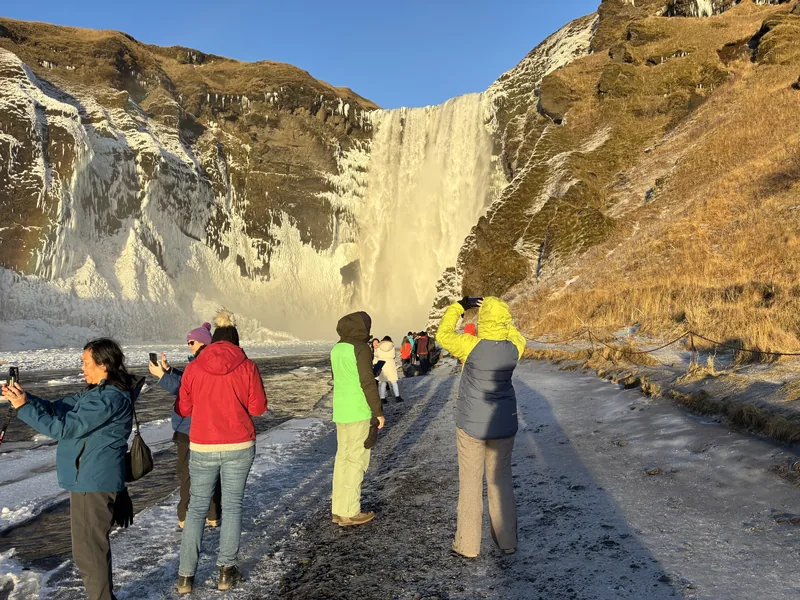
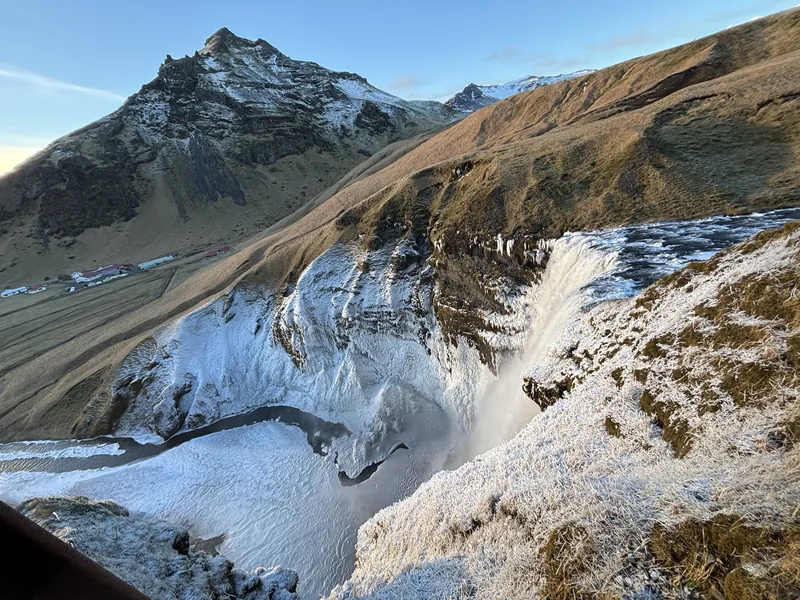
Then we headed to Skógafoss for a different kind of waterfall, broad and huge. At the bottom, you can get really close, and steps also lead up to a viewpoint at the top. If you have time, you can continue along the river to more waterfalls. The ground at the bottom was icy when we visited, and some people were wearing traction spikes over their shoes. Even on a short walk, that kind of equipment can be useful on icy ground.
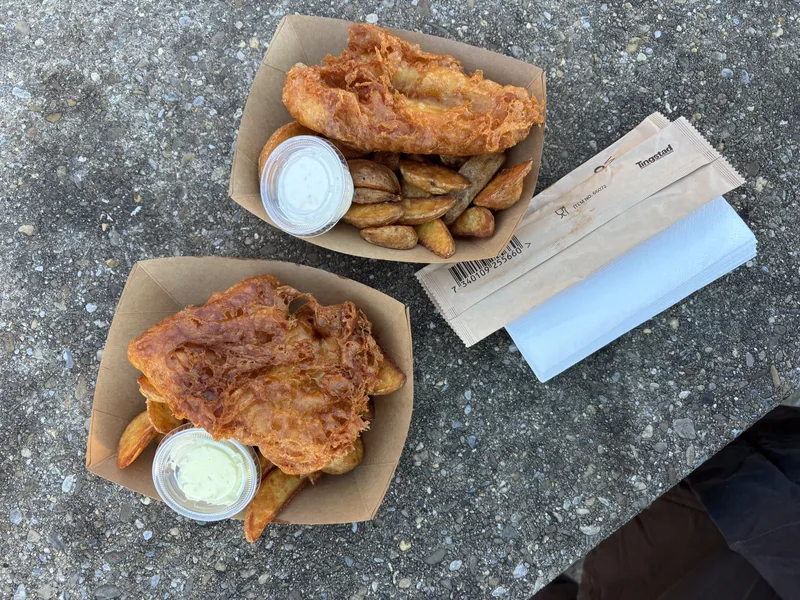
Near Skógar, we ate at Mia’s Country Van. We ordered two portions of fish and chips for about ISK 7,000 in total. There was a choice of remoulade, mayonnaise or ketchup, and we enjoyed the fish. Then we bought a few more groceries at Krónan and headed back to our base. We didn’t have time for another long outing.
Food in Iceland: our groceries and where we ate
I spent about €151 on groceries for three days at Krónan. That’s quite a lot, but manageable for a short trip. Rice, potatoes, bananas, milk and cheese seemed reasonably priced to me, so I wouldn’t bring those basics from home. We also ate in restaurants alongside our grocery shopping, so this wasn’t the family’s total food budget.
We tried local bread with salted butter and smoked Arctic char, which was delicious. Just spread the butter on the bread and put the fish on top. We wouldn’t have used a whole block of butter on such a short trip, but luckily they sold little hotel-style portions too. I also picked up some thin ginger biscuits. There weren’t any bags available for fruit, vegetables or potatoes when we shopped, so pack your own reusable produce bags.
Besides lunch at Geysir Glíma Restaurant and fish and chips at Mia’s, we also tried the Icelandic Fish and Chips stand. We ate standing up, and a portion cost around ISK 3,000 to 3,500. We found it tasty and cheaper than many restaurants. I wouldn’t save money in Iceland by going hungry all day. A basic grocery shop and meals big enough to feed the family are a better approach.
Parking, short daylight hours and planning your stops
We downloaded the Parka app to pay for parking. It worked almost everywhere, although at one place we had to pay another way. We often paid about ISK 1,000 per car. That isn’t a standard fee at every Icelandic attraction, so read the signs at each car park. Some places charge admission as well as parking, such as Kerið, while others have no further charge to visit.
Short daylight hours were the main limit on our itinerary. In winter, plan outdoor stops for the daylight hours rather than copying a summer itinerary with long evenings of exploring. In summer, you can start later and make use of the evening light. Other travellers told me they shifted their routine, set out in the afternoon and explored until 10pm or 11pm. They found many places much quieter that way.
People’s experiences of crowds vary. Some have travelled comfortably even in peak season, while others have waited around forty minutes to park at Skógafoss towards the end of summer. I wouldn’t treat that as a fixed waiting time, but as a reason not to schedule every stop to the minute. You may find quieter spots away from the best-known sights, or by walking beyond the first viewpoint, always allowing for the weather and what your children can manage.
What the children wore and what to pack
We wore winter boots, more like snow boots, and the children had a merino base layer under their clothes. Over that went a fleece, snow trousers and a winter jacket, plus balaclavas, hats, gloves and neck warmers. At -16°C, we were very glad of those proper winter clothes. At the Dyrhólaey lighthouse, strong winds added to the cold, so the temperature on your phone doesn’t tell the whole story.

We brought traction spikes for our shoes but didn’t end up using them ourselves. At Skógafoss, though, we saw people wearing them on the icy ground. For short winter walks, consider slip-on traction spikes and choose a size that fits your boots. These are for ordinary icy paths and do not replace the equipment needed for walking on a glacier.
The northern lights: we didn’t see them this time
I followed the northern lights forecast in the Aurora app, and we hoped to watch them near our accommodation. When we had clear skies, though, the forecast didn’t look promising, and we didn’t see them in the end. Clear skies alone aren’t enough: you also need darkness and suitable auroral activity. I’d treat them as a wonderful bonus, rather than something you must manage to see on a short trip.
Alongside the app, use the Icelandic Met Office forecast. It shows cloud cover and expected activity, with white areas representing clear skies and green areas cloud. For more detailed information, try SpaceWeatherLive. Organised northern lights trips are also available, but they can’t guarantee a sighting either. Don’t drive onto a closed or unsafe road in search of clear skies.
What to add if you have more time in Iceland
Whale watching from Reykjavík
Whale watching is one of the things I’d consider on a longer trip. For this short itinerary, a departure from Reykjavík would avoid a drive to the other end of the island. With children, choose a boat based on age requirements, trip length and whether there’s a heated cabin to retreat to. The sea can be rough, and wildlife sightings aren’t guaranteed, so check what happens if your particular trip is cancelled because of the weather.
More stops: cafés, lava and museums
I’d saved Skool Beans, a café in a school bus in Vík, but sadly we didn’t get there. I also considered a lava-related activity. If you want to see real molten lava during a demonstration, look at the Lava Show in Vík. This is different from the Lava Centre volcano museum in Hvolsvöllur, so choose according to the experience you want.
I also liked the sound of Skyrland in Selfoss, an exhibition about skyr, and the maritime museum in Reykjavík. We couldn’t fit them in, or another swim at Fontana. If you’re choosing between lagoons, check their age limits: Sky Lagoon, for example, is for ages 12 and over. The stops in our itinerary are my main suggestions; keep these extras for when you have time and they suit your family’s interests.
Fjaðrárgljúfur and Jökulsárlón on a longer trip
Someone also recommended Fjaðrárgljúfur canyon, and I’d saved Jökulsárlón glacier lagoon. We didn’t get to either. If you want to include them, add more days and stay further east rather than squeezing them into this short trip from Laugarvatn. On a longer visit, I’d also love to get away from the main tourist spots and have more time for walks.
Iceland with kids: frequently asked questions
Is three days enough for Iceland?
Three days were enough for our short route around the Golden Circle and part of the south coast. Allow more time to drive around the whole island or continue as far as Jökulsárlón.
Can you explore Iceland with kids without long hikes?
Yes. We chose Gullfoss, the geysers, Kerið and a viewpoint at Þingvellir. On the south coast, we added a view of Sólheimajökull and several waterfalls. Access varies with the weather, snow and ice.
Do you have to walk onto a glacier to see it?
No. You can follow the visitor path to a viewpoint at Sólheimajökull. Walking on the glacier itself requires a guide and suitable equipment. We did not go onto the ice.
How did we save on accommodation?
We stayed through HomeExchange without paying nightly charges. The service has a paid annual membership, and exchanges can be reciprocal or arranged using GuestPoints. Our referral code is martin-cc28e.
Read next: Svalbard · Tromsø in winter · Ivalo and Inari with kids · Rovaniemi itinerary
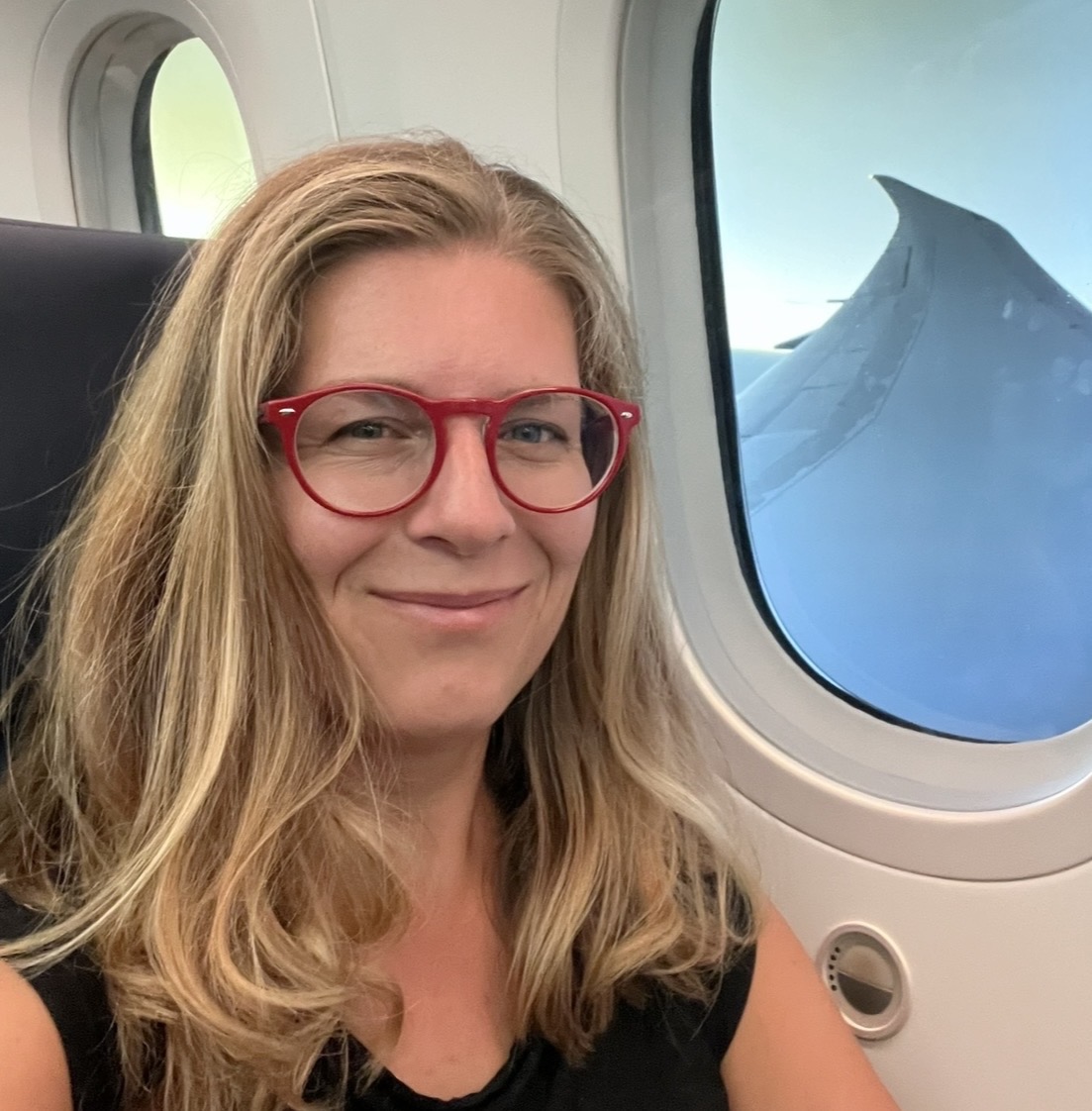
I started travelling after finishing secondary school in 2005. Since then, I have studied in New Zealand and lived in Malta, Madeira, Brittany and Porto. I speak English and French, some Portuguese and very basic Chinese. I travel with hand luggage only and used to stay through Couchsurfing; these days, I use HomeExchange. I travel with my two children. Professionally, I am an agile coach, and I also perform improvisational theatre. Read more about me and my work as a Czech travel influencer.