

Below you’ll find our one-week Azores itinerary, places to stay (that windmill is gorgeous!), what we spent, where we ate and the viewpoints we loved most. I’ve fallen for the Azores: wonderfully isolated, with a long way to go in every direction. We’ve visited several times, including other islands, and I really recommend my Terceira guide (in Czech). For help finding flights, you can message me here through my Czech-language travel membership.
Our own base was Vila Laura near Ribeira Grande. We liked our room with a private bathroom and breakfast, and the location saved us time on drives around the island.
The Azores at a glance: which island and how to get around
- First visit, one week: stay on São Miguel. Even with a car, we were busy for all seven days. You get crater lakes, hot springs, beaches and whale-watching trips on one island.
- Ten to fourteen days: add just one or two islands to São Miguel, perhaps Pico and Faial, or Terceira. Transfers take up more of your holiday than the map suggests.
- With a car: the Ribeira Grande area worked well for us as a base, with manageable drives to both ends of the island.
- Without a car: stay in Ponta Delgada. There are buses, but they aren’t particularly practical for viewpoints or a busy sightseeing itinerary. Allow for organised day trips.
What to sort out before your Azores trip
- Download our sightseeing map for São Miguel and Terceira to your phone. The descriptions and purchase page are in Czech.
- Arrange travel insurance that covers your destination and planned activities.
- Check whether your bank card or lounge membership includes airport lounge access. My lounge guide is in Czech and mainly covers Czech card benefits.
- Book your São Miguel accommodation and enter your own dates.
- Book a hire car. I’d use this comparison site rather than book directly: we use it on most trips because of the customer support and the option to choose a booking with free cancellation. Check the cancellation terms of the offer you select.
- 💡 My money-saving tip: if you’re booking excursions, boat trips or tickets, download this travel app and use CESTUJZABABKU5. The code only works in the app downloaded through that link. I used it to book a whale-watching trip because I wanted to secure a place rather than sort it out on arrival.
- Book evening hot springs with dinner in advance, especially without a car: the trip includes transport.
- Check your passport and Portugal’s entry requirements for your nationality. The Azores are part of Portugal and the Schengen area.
- Consider an AirTag for your iPhone to help locate a missing bag. This link goes to Alza, a Czech retailer.
People often ask whether Madeira (guide in Czech) or the Azores are better. There isn’t one answer. The Azores feel more isolated, farther out in the Atlantic, with plenty of visitors flying in from North America. Madeira has its levada walks and delicious poncha. A little detail I like: the passion-fruit soft drink is called Kima in the Azores and Brisa on Madeira.
🚗 My car-hire guide covers deposits, insurance and common rental mistakes. Read the guide (in Czech).
Our 7-day São Miguel itinerary with a toddler
This was our peak-season itinerary with our two-and-a-half-year-old son. I recommend downloading our map, which opens in Google Maps; its descriptions are in Czech. It was quite a packed week, and I was surprised by how much we managed. Adámek usually had his post-lunch nap in the car while we drove to the next stop. We brought our own car seat and the airline carried it free: there’s more in my guide to flying with children (in Czech).
Day 0, Saturday: late-evening arrival
Day 1, Sunday
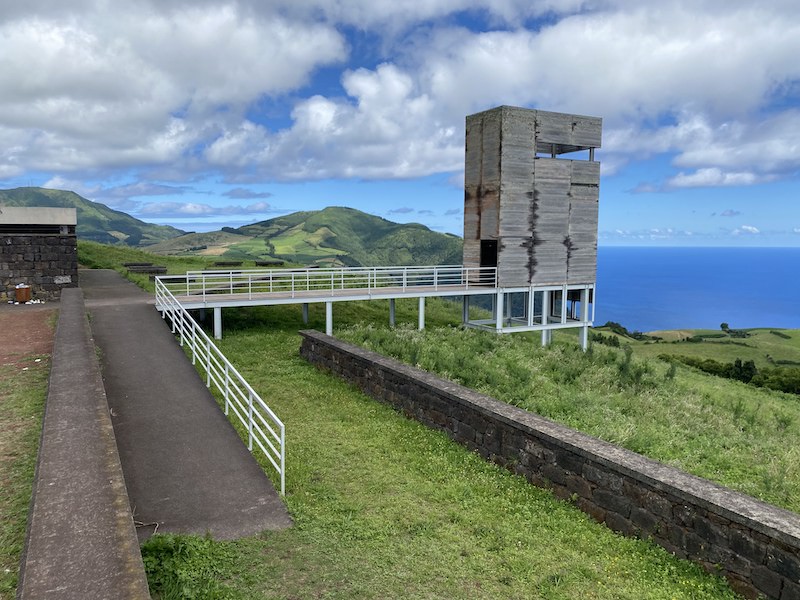
- Miradouro do Cintrão near our accommodation and the old harbour
- A swim at the municipal pools in Ribeira Grande
- Steaks at Associação Agrícola de São Miguel
- The waterfall in Porto Formoso: don’t miss it, such gorgeous jungle-like surroundings!
- Praia dos Moinhos, with a lovely little stream for children and a beach bar
Day 2, Monday
- Poça da Dona Beija hot springs: admission allows up to 90 minutes. Adults pay €12 for entry up to 17:30 or €16 from 18:00; children aged 2 to 6 pay €10 or €14, and under-2s enter free. Buy tickets online in advance. Without a car, consider an evening trip with hot springs, transport and dinner, which can sell out.
- Furnas: we paid €3 per person to visit the lakeside geothermal area
- Praia do Fogo in Ribeira Quente
Day 3, Tuesday
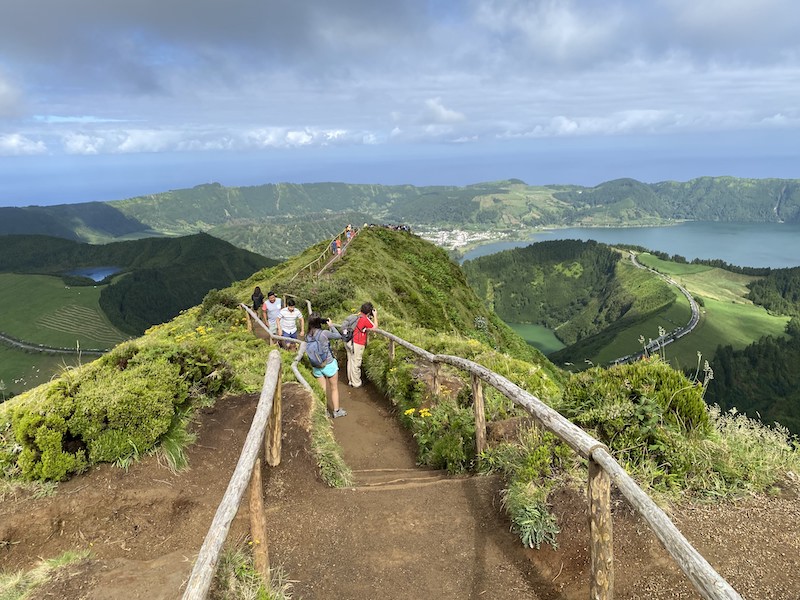
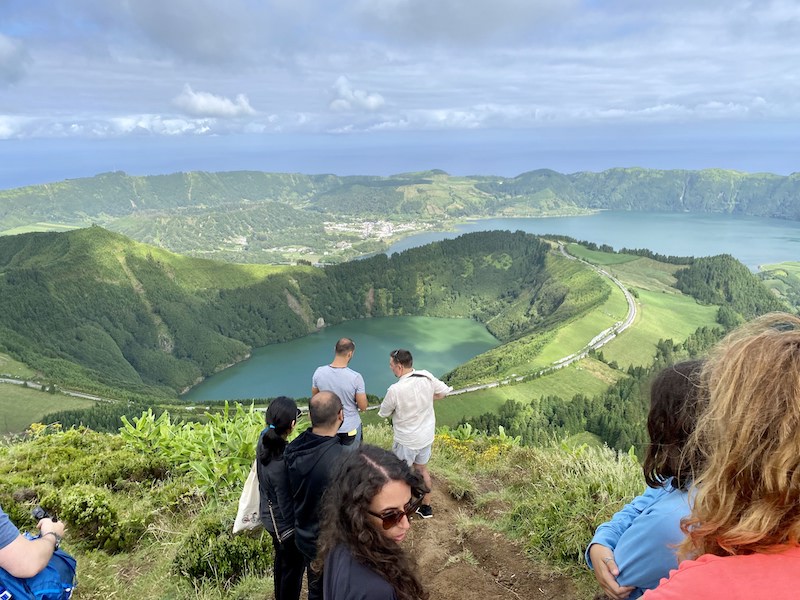
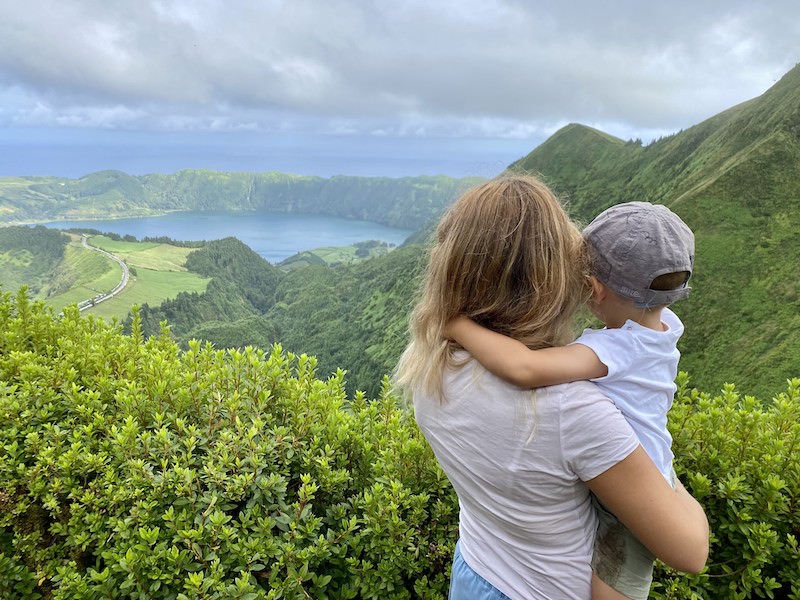
- The Hawaii-like viewpoint walk at Sete Cidades, returning by a different route; the car park was full afterwards
- We skipped the hotel and street food that day and ate at O Poejo instead
- The natural hot-water swimming spot at Ponta da Ferraria
- An evening swim at Ribeira Grande’s municipal pool: during our visit it was free after 20:00 and open until 21:00
Day 4, Wednesday
- Caldeira Velha at 09:00
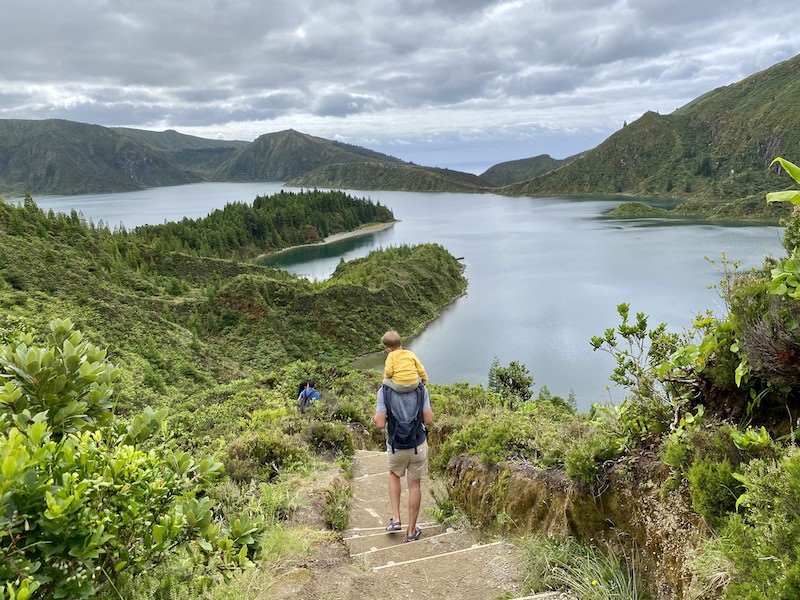
- Lagoa do Fogo: access for hire cars on the scenic road is restricted during the summer shuttle season. Check the current dates, fares, timetable and access rules on the official Lagoa do Fogo website. We walked down the steps to the lake and climbed back by a different route.


- O Pescador in Rabo de Peixe for delicious fresh fish
- Santa Bárbara beach, great for swimming and surfing
- A gallery in a former distillery in Ribeira Grande: the Arquipélago contemporary arts centre, interesting for its architecture too
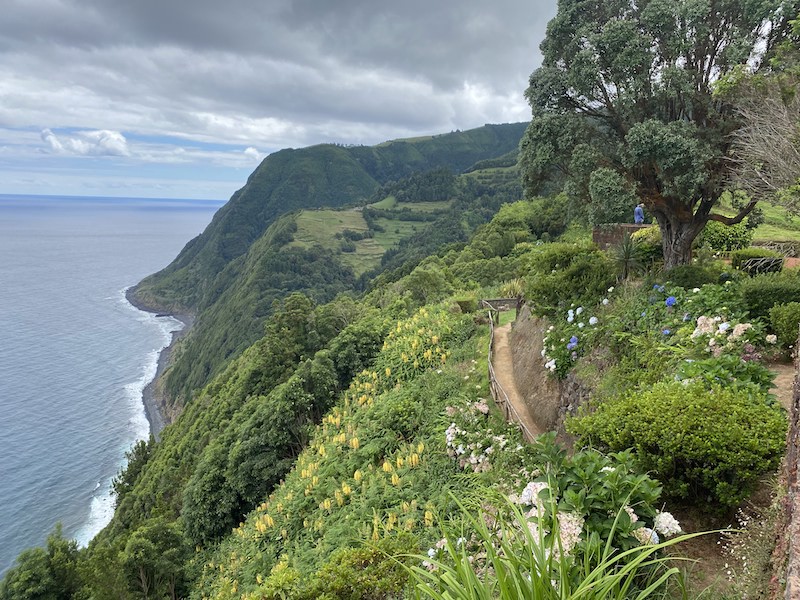
Day 5, Thursday
- The market at Santana near Ribeira Grande
- The animal area at Nordeste’s recreational forest reserve for our little one
- Lunch at Casa de Pasto O Cardoso, then along the coast towards Povoação
- Miradouro da Ponta do Sossego: the prettiest picnic and barbecue spot
- A look at the coastal spot marked in our notes as Secret Ocean Parking
- Pico Long viewpoint
- Miradouro do Pico dos Bodes, with its viewing tower
- Povoação children’s pool, playground and minigolf: all were free when we visited and brilliant for children
- On the drive back, Miradouro do Salto do Cavalo for a lovely view of Furnas lake
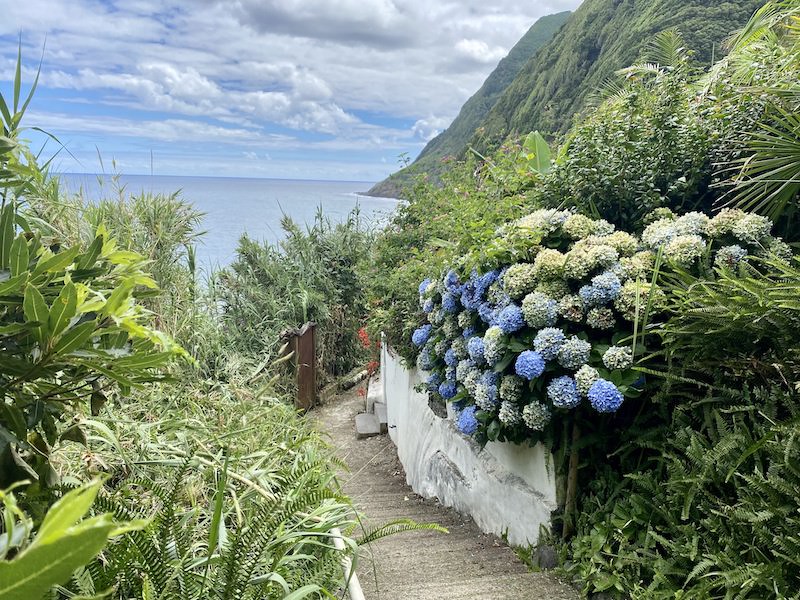
Day 6, Friday
- The hotel ruins and Miradouro da Vista do Rei
- My tip: you can get a similar view a little farther along
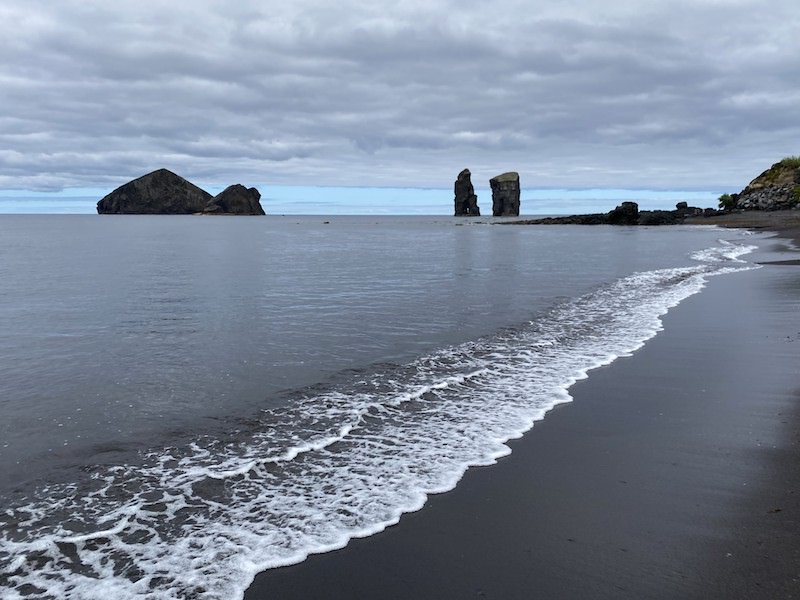
- Mosteiros beach
- Seafood at O Américo in Mosteiros: try the limpets
- Miradouro da Cumeeira for a view of the crater
- Santa Bárbara beach
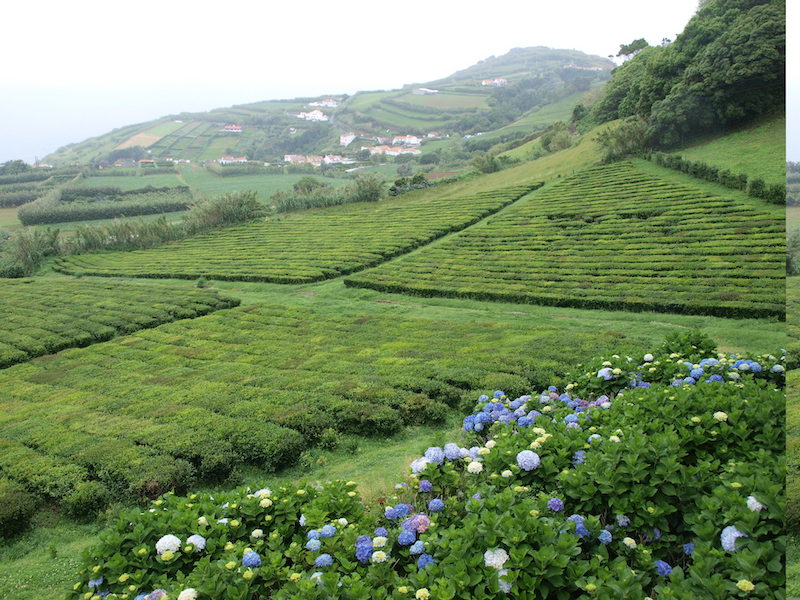
- Porto Formoso tea plantation
- The recreational park near Ribeira Grande and pizza from the car park outside: a hit with our little one!
Day 7, Saturday
- Checking out of Vila Laura
- Central Ponta Delgada: we paid €0.60 an hour in the underground harbour car park and bought Azorean ice cream at the Mucca stand by the playground
- Watching aircraft take off and land from the runway viewpoint
- Returning the hire car and heading to the airport. There was food available after security at Ponta Delgada, though queues can build up: it’s a fairly small airport.
Whale watching is one of the special opportunities the Azores offer. You never know when you’ll be back, and flight routes can change from one year to the next. In peak season, book your boat trip ahead because the most convenient times can sell out.
Three boat trips and day tours on São Miguel
- Whale and dolphin watching from Ponta Delgada: a three-hour trip with a marine biologist, with a choice of catamaran or faster boat.
- A full-day tour of western São Miguel: Sete Cidades, Lagoa do Fogo and lunch. Especially useful if you aren’t hiring a car.
- Evening Furnas with hot springs and cozido: transport from Ponta Delgada, a soak and a traditional dinner in one trip.
Flights to the Azores from the UK and the US
From the UK: British Airways operates a seasonal direct route from London Heathrow to Ponta Delgada on São Miguel. For travel outside its summer season, or from other UK airports, compare connections through Lisbon or Porto with TAP Air Portugal and Azores Airlines. Check the actual operating dates before arranging accommodation: an airline selling a London-to-Azores ticket doesn’t necessarily mean the flight is nonstop.
From the US: start by checking Azores Airlines from Boston Logan and New York JFK to Ponta Delgada. United also serves Ponta Delgada from Newark seasonally. If none of those fits your dates, a connection through Lisbon is another option. Don’t confuse JFK and Newark when planning your onward journey, and check whether each flight you select is nonstop or connecting. Ryanair ended its Azores services from 29 March 2026, so older advice about cheap Ryanair routes is out of date.
We found a great fare to Terceira (guide in Czech) with SWISS from Prague via Zurich. I’ve grown rather fond of SWISS: we’ve also found excellent fares with them to Fuerteventura, Gran Canaria (guide in Czech) and even Lapland. That’s our own European departure experience; for a trip starting in Britain or the US, use the routes above as your starting point.
✈️ Want my practical booking tips? Watch my independent-travel webinar (in Czech).
A strike threatened our return journey, but fortunately it was called off. If your flight is cancelled or badly delayed, my guide to disruption and compensation explains what to do (in Czech). You can also check a compensation claim. The České Azory Facebook group is another resource if you read Czech.
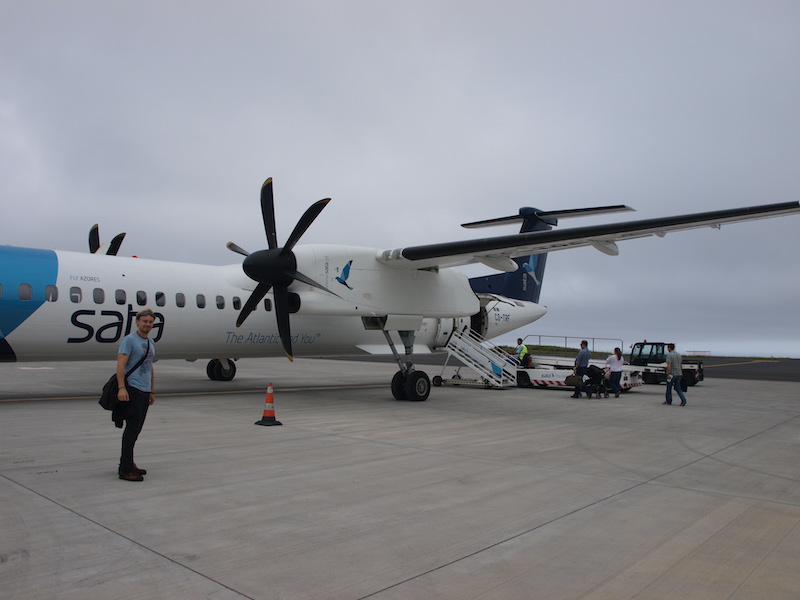
Between islands, flights are operated by SATA Air Açores, while Atlânticoline runs ferries. Boat connections are easiest within the central group, particularly between Pico, Faial and São Jorge. From São Miguel, flying is usually the more practical way to reach another island.
Ferries offer their widest network in summer; some routes are reduced or don’t run outside the season. Check Atlânticoline’s current timetable and allow for weather-related changes. On one of our trips we stayed entirely on São Miguel because inter-island flights were expensive, and we still had a very full week. We’ve also spent a whole week on Terceira (guide in Czech).
If you travel on a British or US passport, check Portugal’s current entry rules before departure: UK government advice and US State Department advice. Passport rules apply to children too. For a trip with separate flight bookings, leave a generous connection buffer, as the second airline may not protect you if the first flight is delayed.
Azores weather: when to go
The weather in the Azores is wonderfully unpredictable, and forecasts don’t always tell the whole story. In a single day you can get blue skies, clouds, rain and a proper downpour. Summer is generally the best period for exploring, particularly July and August when rainfall tends to be lower. Even then, keep your plans flexible enough to swap days around.
Summer isn’t a guarantee, though: we’ve seen cool summer weather and lovely conditions outside the main season. An off-season visit can surprise you pleasantly and cost less in flights too. Our return tickets from Nuremberg to Ponta Delgada cost about €155, and we travelled with just small cabin backpacks. I really recommend the backpack I use (guide in Czech): we’ve used it as our free under-seat bag on budget-airline trips for six years, taking care to meet the airline’s limits.

On one visit outside summer we actually felt quite cold, and Martin had a similar experience on another trip. That’s why we decided we’d return in summer. On our summer São Miguel visit the weather was lovely: one day was almost hot, with the other days around 19 to 24°C and partly sunny, ideal for exploring. Conditions can still vary a lot, so there is no way to guarantee sunshine. On our summer trip to Terceira, we had a beautiful week and swam in the sea much more often than expected.

Where to stay in the Azores
My quick choice: with a car, I’d stay around Ribeira Grande on a first visit; without one, Ponta Delgada. For peace and nature, look east towards Nordeste. For morning walks by the sea and a swim, consider São Roque or Vila Franca do Campo. We had a lovely stay at Vila Laura near Ribeira Grande, described below.
São Miguel tourist tax: in Ponta Delgada and Ribeira Grande, allow €2 per person per night for a maximum of three nights. Children under 13 are exempt. It may be collected separately at the property, so it isn’t always included in the booking total. Rules can differ elsewhere on the island; check your accommodation’s details or the official Ponta Delgada tariff.
Budget options include youth hostels, called pousadas de juventude, and campsites, or campismo. You’ll find my more specific accommodation tips below. We stayed in a room with a private bathroom and breakfast in a villa with a garden. I initially worried about having too little privacy, but it turned out to be lovely.
Being near Ribeira Grande kept us close to many of the best-known sights. The accommodation was Vila Laura, and our week cost approximately €635 for two adults and our two-year-old, including breakfast. Do check the room type: ours had a private bathroom, while readers have told me they weren’t as impressed with some of the other rooms.
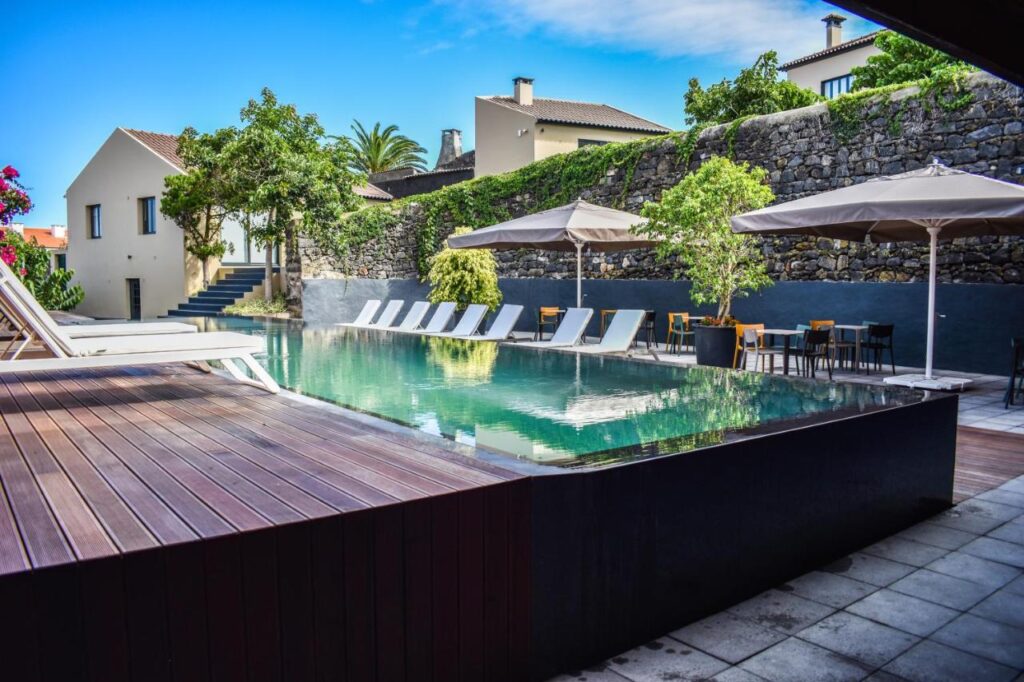
If it’s full, look at Volcanic Charming House, which has a pool in Ribeira Grande, or As Casas da Margarida. This part of the island keeps drives in different directions reasonably manageable. I see that as a big advantage: there are so many things to see in the Azores that time always seems to run short.
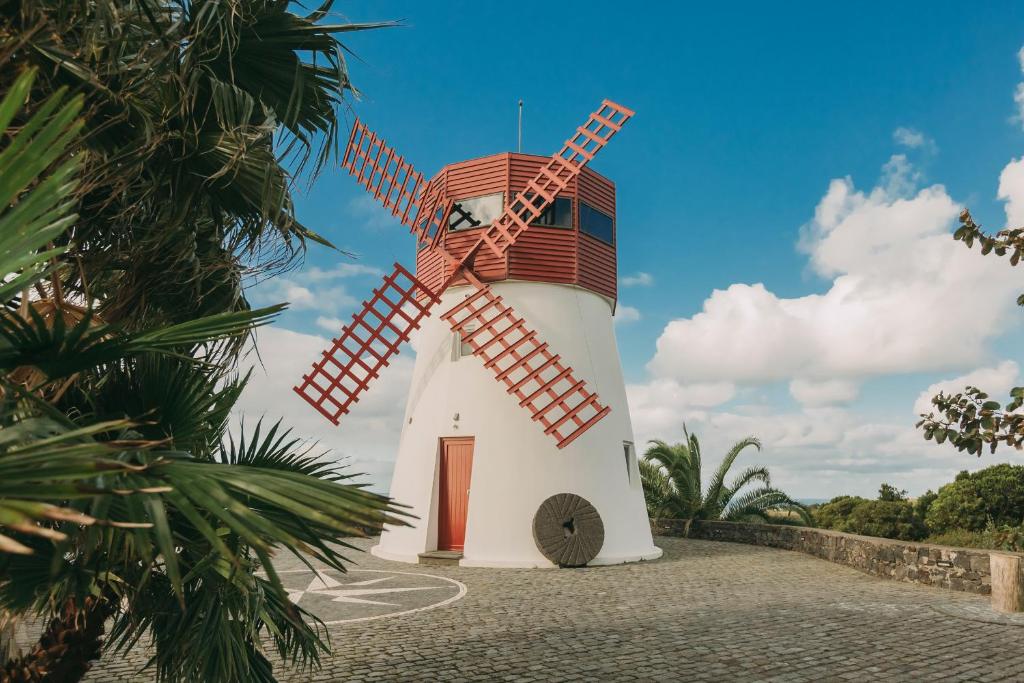
If your budget allows, or you’re celebrating an anniversary, spend a night in a windmill! When I found this place, I immediately thought I had to stay there one day. It’s called Moinho das Feteiras, and it looks gorgeous. To sleep in the actual windmill, choose O Moinho, which sleeps two. The property also has separate one-bedroom cottages, called T1, for up to four guests.
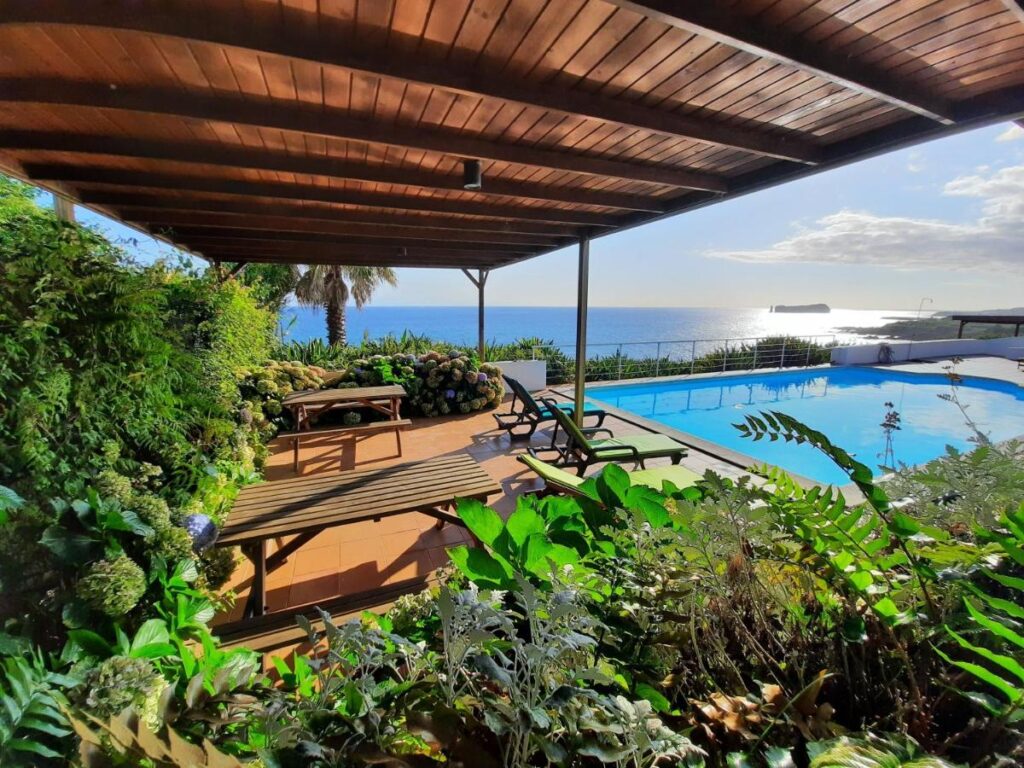
Another option is Quinta Velha das Amoreiras, with a pool overlooking the landscape and a second bonus: a natural seawater pool a short walk from the houses. They also list equipment for children, such as a high chair. It combines a rural setting with access to the sea, rather than being a conventional beach hotel.
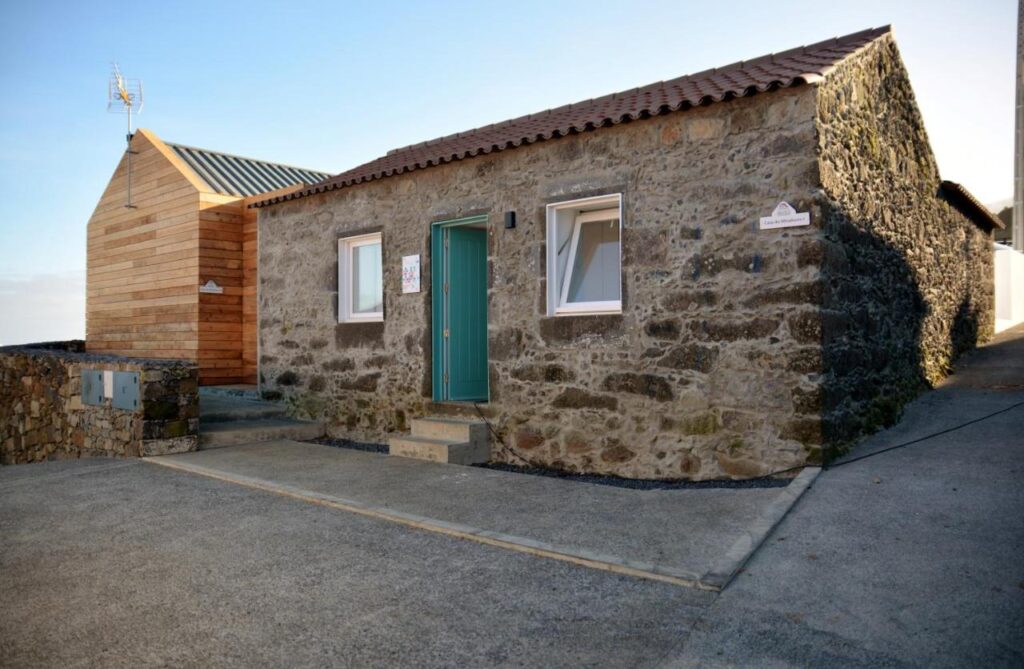
I like places with local character, and the renovated stone houses at Aldeia do Priolo fit the bill. They come in different sizes, with terraces and lovely views. Reviews praise the care given to guests, including little touches such as fresh-bread deliveries. It’s a peaceful option in the eastern part of São Miguel, near Nordeste.
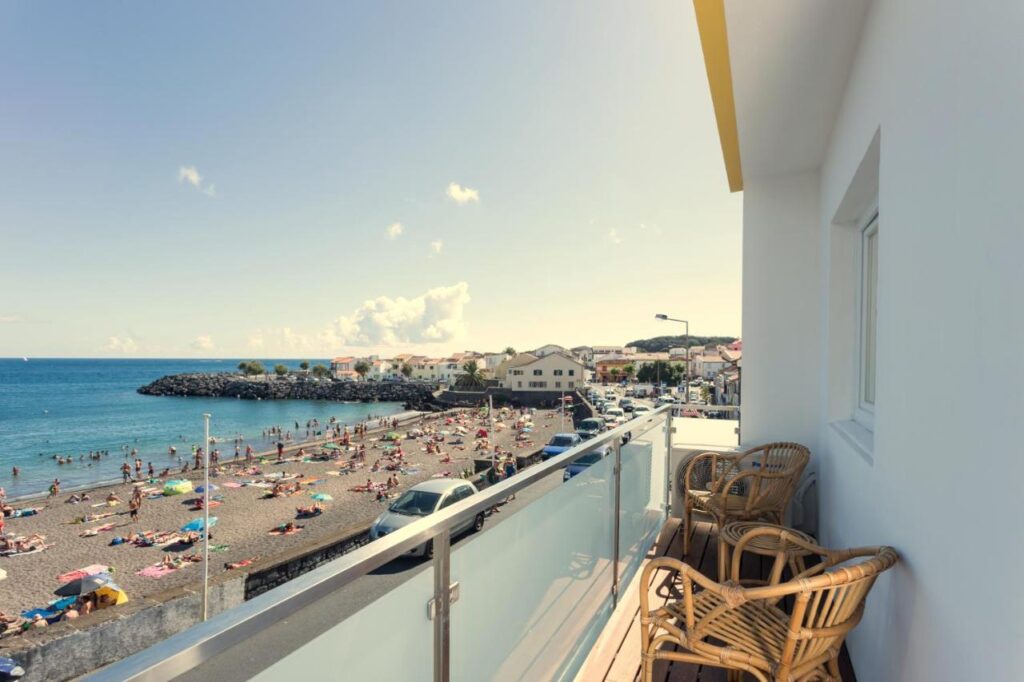
We wanted to swim in the sea too, or rather the ocean. If you want to combine sightseeing with an early beach walk, or you’re travelling with young children, look at Beach House by Azores Villas beside the beach in the São Roque area. I found the beach lovely for little ones. It gets busy during the day, but staying nearby lets you enjoy the early morning or sunset.
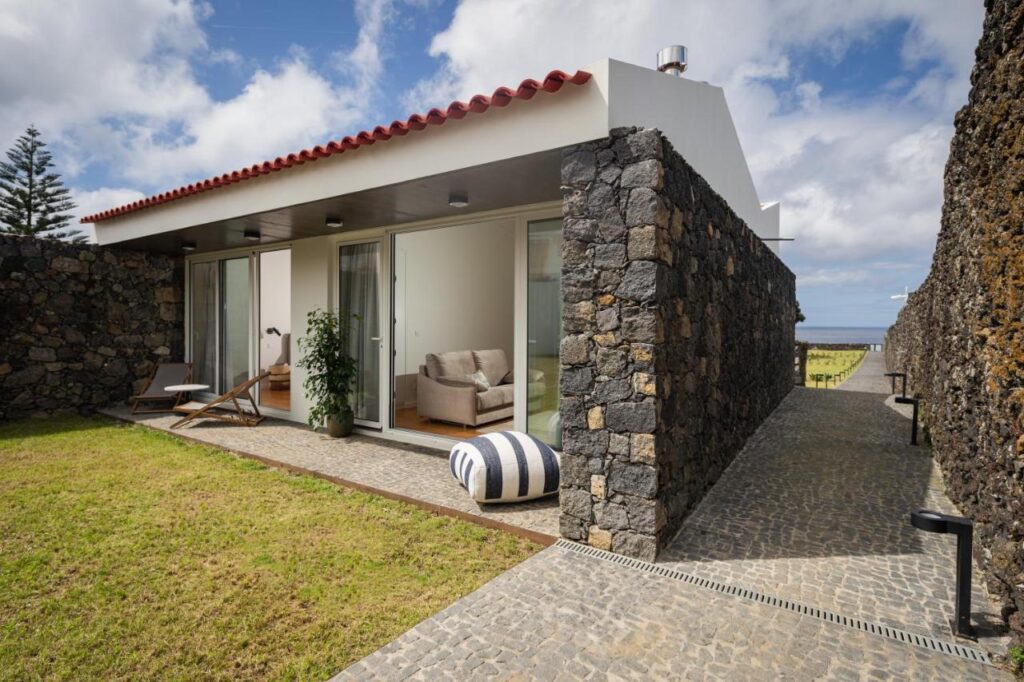
Personally, I’d be even more tempted by Entre Muros, with its garden and access to the sea. Families with young children speak highly of it too. It’s a turismo rural property, the Portuguese term for rural accommodation, with plenty of local character. Have a look at the photo: this is much more my sort of place than a big anonymous resort.
For a stay right by the hot springs in Furnas, look at Terra Nostra Garden Hotel. Guests have access to the botanical garden and thermal pools 24 hours a day included in their stay, so you can soak outside normal public visiting hours. I’d love a few nights here with warm water waiting after a day out. Bear in mind that the main thermal pool closes temporarily for regular cleaning; the thermal jacuzzis are offered as an alternative.
Getting around the Azores
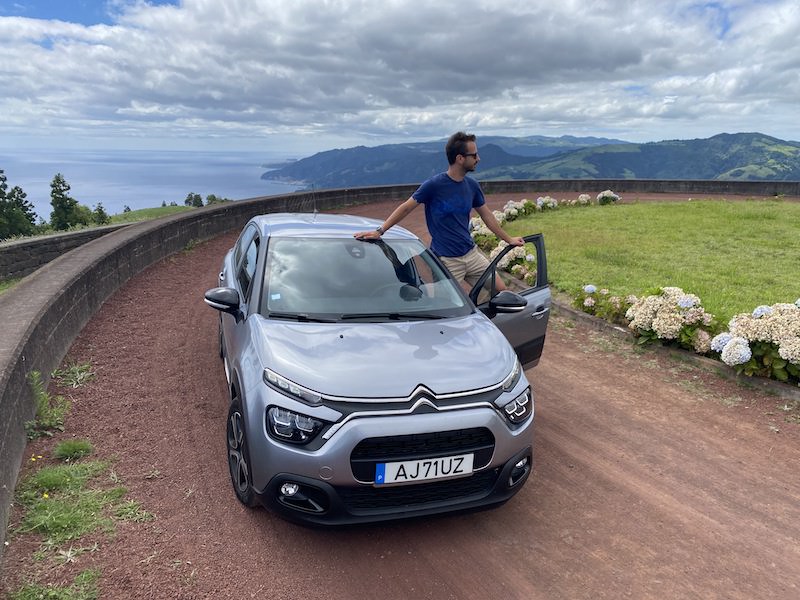
There are buses, but they can be awkward for viewpoints, hot springs and trailheads. Some routes run only a few times a day, with fewer services at weekends or outside the main season. To explore São Miguel in a week as we did, a hire car saves a lot of time. Book early for peak season. Without a car, I’d stay in Ponta Delgada and combine buses with organised day trips.
For car hire, I recommend finding the companies mentioned below on Discover Cars and booking there. We’ve had good support when something went wrong, which is why we’ve used it exclusively for five years. You can select offers with free cancellation or changes, but check your chosen booking’s conditions. I also recommend checking the actual rental company’s recent Google Maps reviews before committing.
Alongside international firms, local options include Ilha Verde, which we’ve used, and Micauto. Micauto collected us from the airport in a van; their office was about five minutes away. We were very happy with them, and our late-night arrival wasn’t a problem. The car cost about €610 for a week, the cheapest option we found through Discover Cars. I’ve written more about what to watch out for with car hire here, in my Czech-language membership.
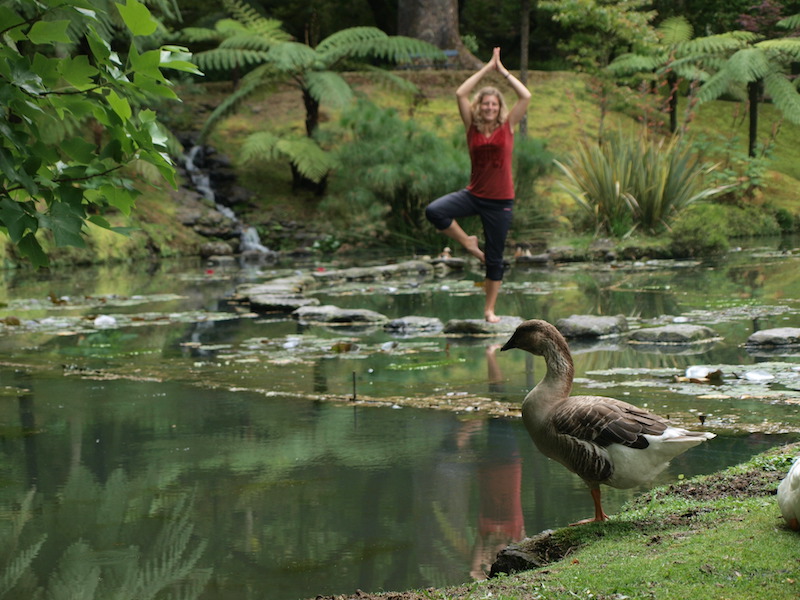
If you have plenty of time and are travelling with a backpack, hitchhiking is another possibility. It worked quite well in the Azores in our experience, particularly with local people willing to stop. The compromise is that it’s harder to see everything: you can’t simply pull over at every wonderful viewpoint. I would choose a car for a packed family itinerary.
Buses on São Miguel
Find São Miguel routes and departures on the bus operators’ interactive map. Check the timetable for your actual travel day and, crucially, for the journey back. Buses can be useful between towns, but don’t expect them to connect all the viewpoints in our itinerary conveniently. Plan a slower day if you’re relying on them.
Buses on Pico
Pico’s main bus routes run from Madalena towards Piedade along the north and south coasts. Services are limited, and crossing the island by bus can take a while. Check a current timetable before setting off, including your return journey. If you’re trying to combine several sights in a day, allow for the time spent waiting between buses.
Before any hike, check the Azores Trails alerts for closures. Heavy rain, landslides and maintenance can change access from one day to the next. Look up the specific trail you plan to walk rather than assuming that another walk in the same area being open means yours is too. Follow closures and signs on the ground.
São Miguel: lakes, viewpoints and hot springs
São Miguel is the largest Azorean island, with Ponta Delgada as its main city and an international airport. These are the places I’d make time for on a first visit. To save yourself adding every stop individually, download our sightseeing map to your phone. It includes São Miguel and Terceira, with descriptions in Czech.
Lagoa do Fogo and Caldeira Velha
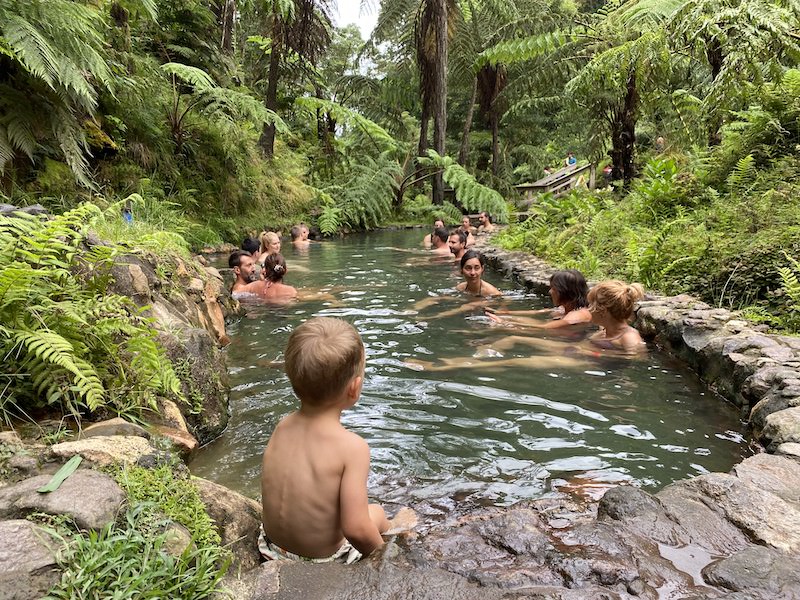
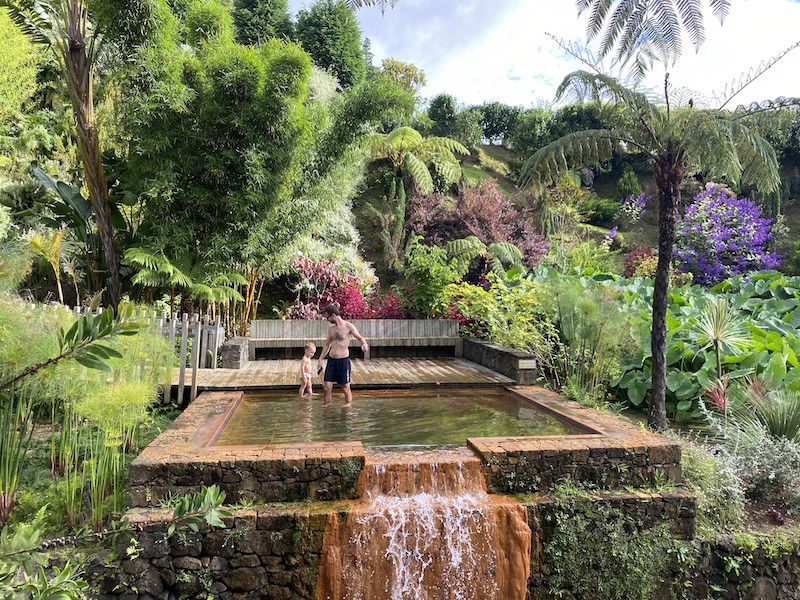
These two places are close enough to combine in one day. Caldeira Velha is a natural monument with lush vegetation, wildlife and, most importantly for a relaxing stop, thermal pools. The iron-rich water has an orange tint and can stain swimwear. A waterfall feeds one of the pools, making it a lovely place to stop for a soak among the greenery.
Tickets cover a 90-minute session; we went at 09:00. We didn’t have a reservation, but you can book Caldeira Velha in advance for a particular day and time. Admission with bathing is €10 for adults and €5 for children aged 7 to 14; children aged 6 and under enter free. A visit without bathing costs €3 for adults, or €5 for a family of two adults and their children up to 14. That family ticket does not include the pools. There were two showers when we visited.
Lagoa do Fogo means ‘Lake of Fire’. It’s a beautiful place for a walk, though we saw a no-swimming sign during our visit. The water looked wonderfully blue and was clearly much colder than the thermal pools at Caldeira Velha. We descended from the road, followed two curves of the shore and reached a sandy beach that felt a world away from the busy viewpoints.
Our walk was short but very hilly: down steps, then along the lake with a little wading and hopping over stones, before a demanding climb back up. At times we were almost scrambling. I definitely wouldn’t do it in reverse: my knees, ouch! We paid for parking, with 20 minutes free and €0.80 for each subsequent 15 minutes, and came back to a completely full car park. I had no idea what arriving visitors were supposed to do. For today’s access arrangements, check the shuttle information above.
Sete Cidades and Ponta da Ferraria
Sete Cidades is a village beside the blue lake, Lagoa Azul, surrounded by a spectacular volcanic landscape. Before driving down, stop for two wonderful views. The first is the path people compare to Hawaii, with scenery opening up in every direction: Boca do Inferno.
Go early, before the car park fills and the crowds arrive. The woodland approach passes Lagoa do Canário. From the viewpoint we chose a western return path with two more views. It was poorly maintained, with what looked like rain-related erosion or a landslip, but we somehow managed it with Adámek. Nobody else came that way! Back at the car park, it was chaos.
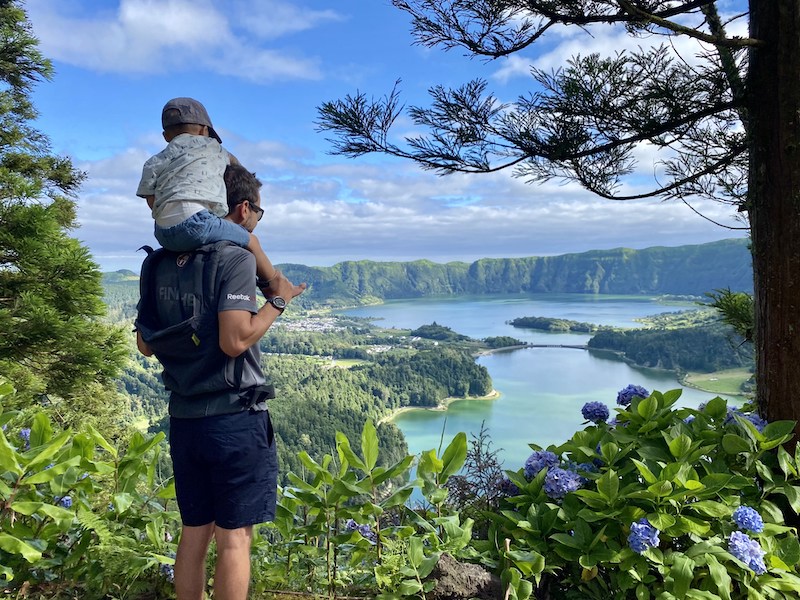
The second famous viewpoint is Vista do Rei, the King’s View. If you don’t want to stand in the busiest spot, walk a little west along the red-marked crater-rim trail shown on Mapy.com, then a little downhill. You can get a very similar view away from the busiest spot. A proposal spot, perhaps? Just beside Vista do Rei stands the abandoned hotel that has long attracted curious visitors.
The hotel opened in the 1980s but later closed after struggling to attract enough guests. People gradually removed whatever they could. On an earlier visit we saw rooms with invoices, employment documents and piles of old televisions. When we returned, we only looked into the lobby and it had been completely stripped. There was a food truck in the car park selling local bifana pork sandwiches, though we didn’t eat there.
The crater rim gives you another wonderful perspective on the lakes. From Sete Cidades, head towards Várzea; the second turning on the left leads towards the rim and the route back towards Vista do Rei. We could drive part of the way, but the end was closed, so we had to return the same way. Miradouro da Cumeeira is another viewpoint with a magnificent crater panorama.
While you’re in western São Miguel, stop at Ponta da Ferraria for a natural seawater bathing spot warmed by volcanic springs. There’s a large car park and a short walk down. Time it for low tide, when the warm water is easier to feel. The warmest spot wasn’t right against the rocks, and ropes in the water gave swimmers something to hold during waves. It definitely wasn’t a place for small children. Access was free.
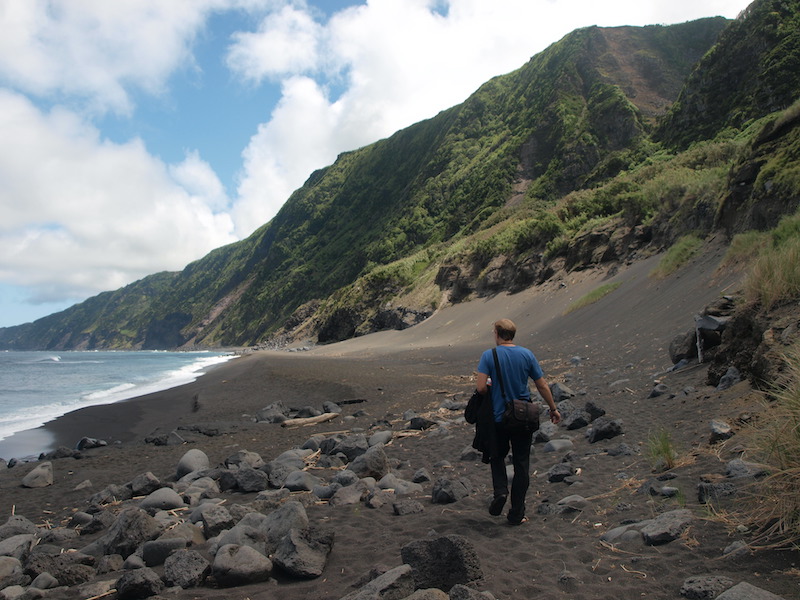
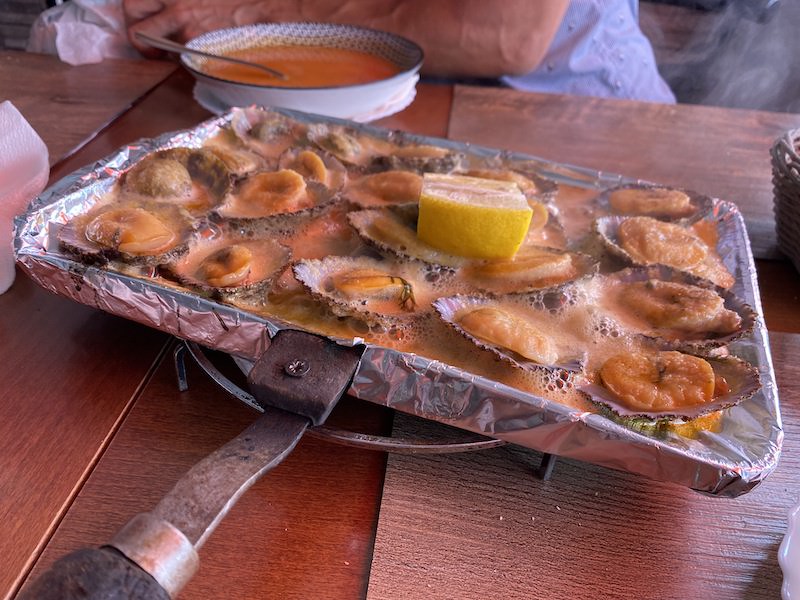
Then stop in Mosteiros. If you haven’t eaten, I recommend seafood, especially lapas, or limpets, at O Américo: booking a table is a good idea. The beach is lovely for its rocks rising out of the water and dramatic coastal setting. We enjoyed combining a meal here with time on the beach rather than rushing straight back inland.
Furnas and Poça da Dona Beija
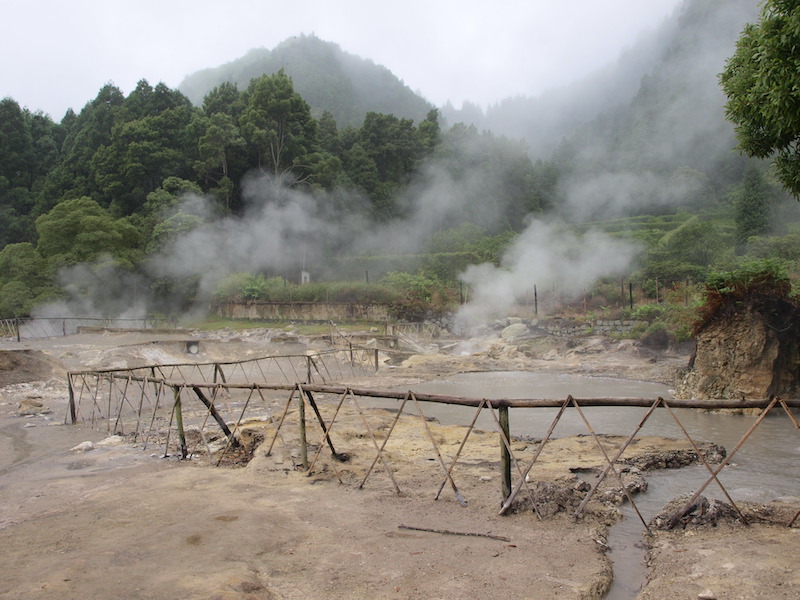
If the weather turns gloomy, don’t despair: head to Furnas. There’s enough here for a full day, whatever the sky is doing. The village sits inside a volcanic crater whose last eruption was in 1630. Between the steaming ground, traditional food, gardens and hot springs, this was one of the places where we could easily fill a day without needing clear mountain views.
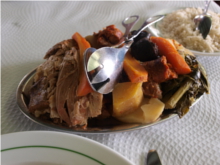
First, order cozido de Furnas at Miroma in the village centre. Cozido is a Portuguese stew of different meats, cabbage and other vegetables, cooked slowly for hours. The Furnas version goes underground rather than in an oven. Volcanic heat warms the ground, with steam and hot water emerging nearby. The pots of cozido spend around six hours cooking in the earth.
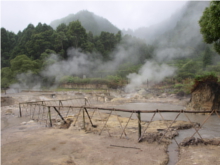
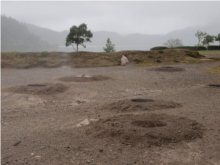

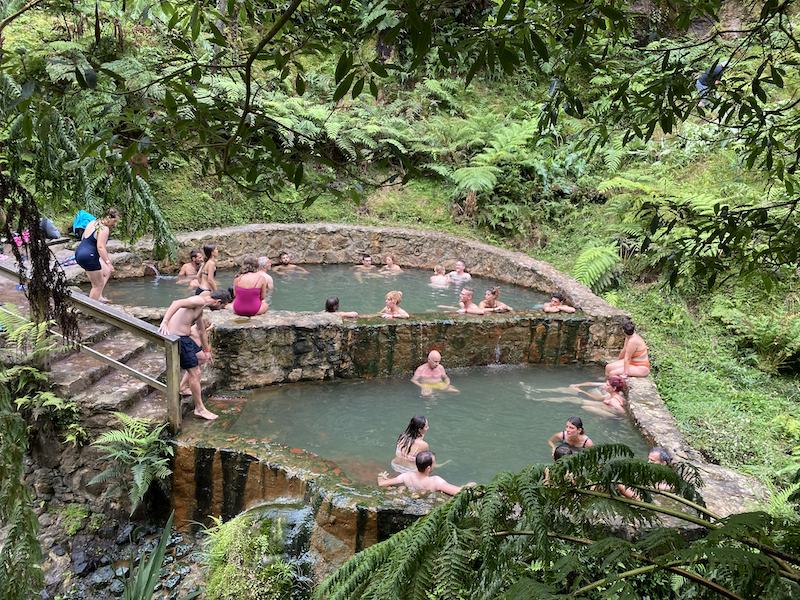
The place where the pots are lowered into the ground is worth seeing too. Afterwards, soak at Poça da Dona Beija, where the orange-tinted water is around 39°C. Buy a timed ticket online: visits last up to 90 minutes. Adults pay €12 up to 17:30 or €16 from 18:00; children aged 2 to 6 pay €10 or €14. Tickets can’t be changed or refunded. Last entry is 21:30, and you must leave the pools by 22:30. Bring an old or dark towel in case it stains; a quick-drying towel is a compact option for travel (Czech shop). There are showers. Compared with Caldeira Velha, I found more pools and more space here.
After lunch, I recommend a walk through Terra Nostra botanical garden. Among its many plants you’ll find ginkgo trees. Adult admission in 2026 is €17, including the thermal pool and jacuzzis. A family ticket for two adults and two children aged 6 to 17 costs €57. You can buy online. If you fancy the beach afterwards, it’s a convenient drive to Praia do Fogo in Ribeira Quente. The car park is large and the beach spacious; we walked farther along and found a lovely spot.
Tea factories and plantations
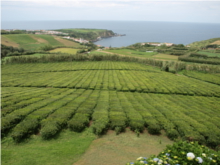
The Azores are the only place in Europe where tea is grown. Visit the tea factories and plantations at Porto Formoso or Gorreana. I particularly enjoyed going towards the end of the day for a look around and a free tasting. It’s a lovely change of pace from walking and driving between viewpoints, and you can take some local tea home.
Lagoa do Canário and Lagoas Empadadas
These small lakes are on the route from Ponta Delgada towards Sete Cidades. You can go for a swim, take a walk and enjoy the beautiful views.
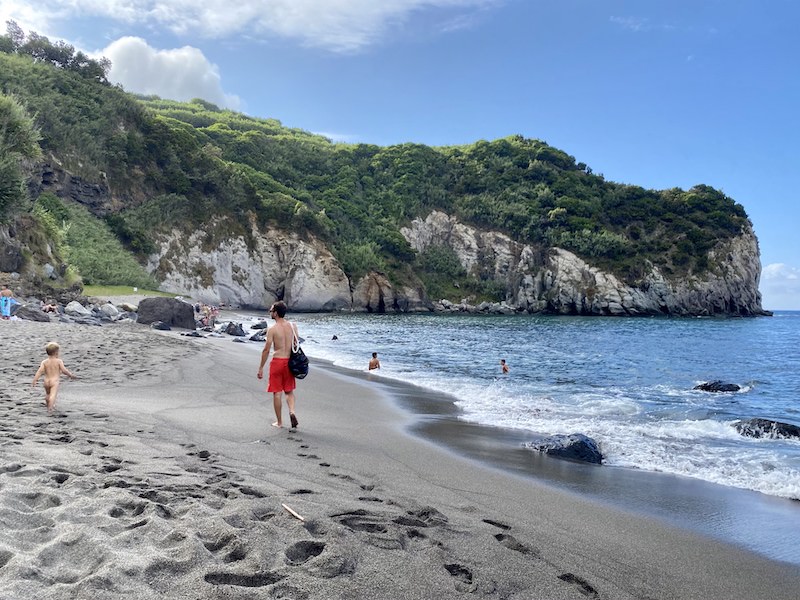
Our favourite São Miguel beaches
Treat this as our selection rather than a complete ranking. We spent a week on São Miguel and naturally didn’t visit every beach. These were the ones we liked. We saw plenty of lifeguards at most of them, and they were actively keeping an eye on swimmers. Always follow the flags and conditions on the day.
- Mosteiros: a smaller, cosy beach with lovely views of the rocks offshore
- Santa Bárbara: good facilities, a long beach backed by cliffs and a large car park; surfing in one area and swimming in another
- Praia do Fogo, Ribeira Quente: a long beach with a large car park and good facilities
- Praia dos Moinhos: a medium-sized beach with a little stream our son enjoyed
São Miguel and the Azores with children
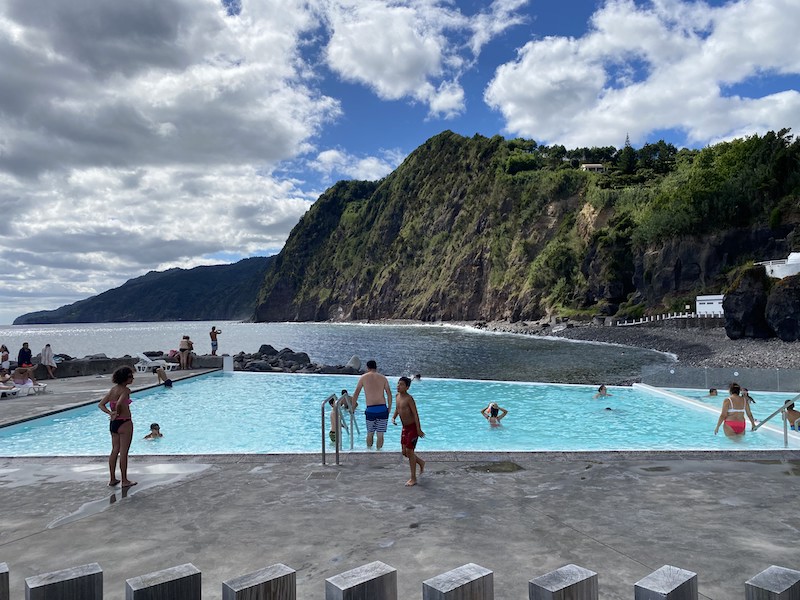
I’d happily take young children to the Azores. Compared with Madeira, we found more beaches that suited our little one: rocky natural pools weren’t as easy, as we’d have needed to hold him constantly. The beaches above worked for us, with shallow water and calm conditions when we visited, though you can’t count on that everywhere or every day. My favourite swimming spot for little children was definitely the shallow pools in Povoação. They seemed made for toddlers.
For variety between viewpoints and drives, these are the places I’d add to a family itinerary. Most have playgrounds, animals or room to play:
- Chã da Macela Recreational Forest Reserve
- Pinhal da Paz Recreational Forest Reserve
- Viveiro Recreational Forest Reserve in Nordeste
- Povoação for swimming and a playground
- Parque de Lazer in Ribeirinha was our accidental discovery, and we loved it, especially Adámek! There were barbecue tables, a homemade-style playground, climbing equipment, wooden cars and boats, and even a viewing tower. Outside the park, a Brazilian couple at Food & Friends pizzeria made us a huge pizza with two different halves, one Azorean and one Portuguese.
Apart from Poça da Dona Beija, our two-year-old Adámek didn’t pay admission anywhere we visited. Another reason I enjoyed the Azores with a small child! That’s our experience of those visits; use the current child fares above when planning today’s hot-spring stops.
Found this guide helpful? You can leave me a thank-you through my Czech-language support page.
Where to eat on São Miguel
There are many more options, of course, but these are places we visited plus recommendations from readers on Instagram and Facebook. Local beer includes Especial, and the passion-fruit soft drink is Kima. Try Furnas cozido cooked underground, lapas (limpets), São Jorge cheese, fofas das Furnas (cream-filled pastries) and bolo lêvedo, a soft, slightly sweet bread that’s rather like an unfilled bun.
Buy an Azorean pineapple and try it with morcela, Portuguese blood sausage. I spotted the combination in a restaurant and made it at home afterwards: delicious! Don’t miss the markets either. The market in Santana near Ribeira Grande, by the steak restaurant, was on Thursday mornings. In Ponta Delgada, try Mercado da Graça on Friday or Saturday morning.
- Associação Agrícola de São Miguel: excellent steaks at friendly prices
- O Pescador, Rabo de Peixe: fresh fish
- O Américo, Mosteiros: seafood
- Casa de Pasto O Cardoso: a good lunch menu, including local-style steak with wine sauce and a fried egg
- Casa do Abel
- Bar Caloura
- Restaurante Poço Azul
In Ponta Delgada:
- Quinta dos Açores
- Tasquinha Vieira
- Taberna Açor
- A Tasta
What we missed or skipped on São Miguel
We left a few things for another time, but that doesn’t mean I’ll keep them from you. These were the places and activities we didn’t fit into our São Miguel week:
- Whale watching: a four-hour outing felt too long for our little one, but without a small child I’d have gone for it. The Azores are a special place for whale watching. I did go on a later trip to Terceira.
- Ilhéu de Vila Franca do Campo: we didn’t make it there. It’s closed for the rest of the 2026 season; boat services ended on 11 October. The reopening date for 2027 hasn’t yet been announced, so check the operator’s website. After its 2025 closure, the islet reopened in 2026 with a daily limit of 400 visitors. The boat operator’s FAQ has booking information; online tickets have been offered 1 to 10 days before travel. You can also look at snorkelling near the reserve with boat transport and equipment.
- Lagoa de São Brás: a lake you can drive up to
- The lesser-known Termas das Caldeiras, south of Ribeira Grande
- Pineapple plantations
- Ponta Delgada: we only had a quick look, as we didn’t feel the need or have time for more
Pico island
Pico is the youngest and second-largest Azorean island, roughly a 50-minute flight from Ponta Delgada. Its main attraction is Portugal’s highest mountain, also called Pico, at 2,351 metres. The climb is a full-day undertaking for fit walkers. Numbers are limited, so reserve through the official Pico booking system. The mountain authority recommends using an accredited guide.
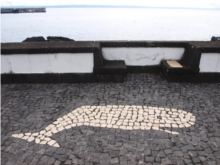
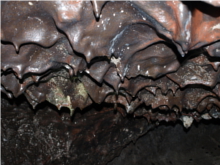
Camping in the crater requires an advance reservation, with limited capacity. You need a tent, sleeping bag and torch. Weather changes quickly, and the GPS tracker issued at registration is for safety, not navigation. The route is marked by wooden posts, but it’s easy to lose your bearings in fog. Check in at the mountain house again when you return.
Pico is also a popular base for whale watching. Boat trips commonly last around two and a half to three hours, with fares and availability depending on the date. No particular animal sighting can be guaranteed: this is wildlife in the open ocean. That’s part of what makes it special rather than something to plan around an exact species appearing on cue.
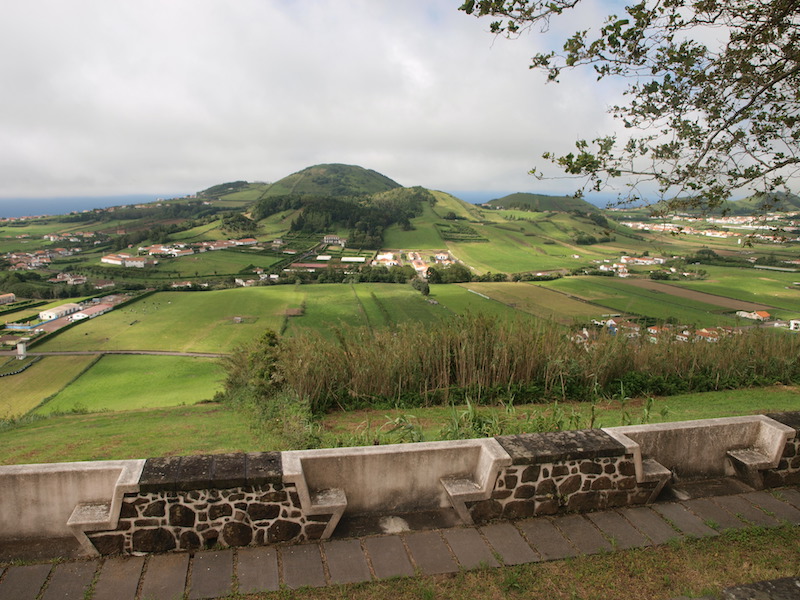
Faial island
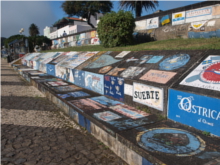
Faial is about half an hour by ferry from Pico. Its main town, Horta, has its own airport and what I think of as the world’s most colourful harbour: visiting crews leave painted names and logos behind. After a swim at the golden-sand beach near Horta, drive around the island. If the weather is clear, walk around the rim of Caldeira, a route of about 8 km.
Walking around the rim and descending into the crater are different things. Under the rules updated in May 2026, entering Caldeira’s interior requires an accredited guide. The daily limit is 30 visitors, groups can contain no more than ten people, and the access fee is €4. Arrange a guide ahead because capacity is small. See the official Caldeira regulations for the full conditions.
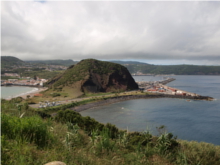
Then visit the beach near Fajã, with dark sand and large waves. Continue towards Ponta dos Capelinhos, where an eruption beginning in 1957 added roughly 2 km² to Faial. The volcano emerged offshore and became joined to the island. You can visit the old lighthouse and the interpretation centre, which explores volcanic activity in the Azores and beyond. It’s a very different landscape from the green crater inland.
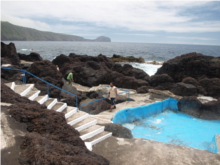
Finish your island drive with a swim in the natural seawater pools at Varadouro.

Terceira island
A week on Terceira almost isn’t enough: there’s so much to do. I recommend whale and dolphin watching, which I did here. And the inexpensive steaks! We also enjoyed swimming at the town beaches in Angra do Heroísmo and Praia da Vitória. Traditional bull events remain a strong part of island life. My full Terceira guide is in Czech.
Watch out for Portuguese man o’ war
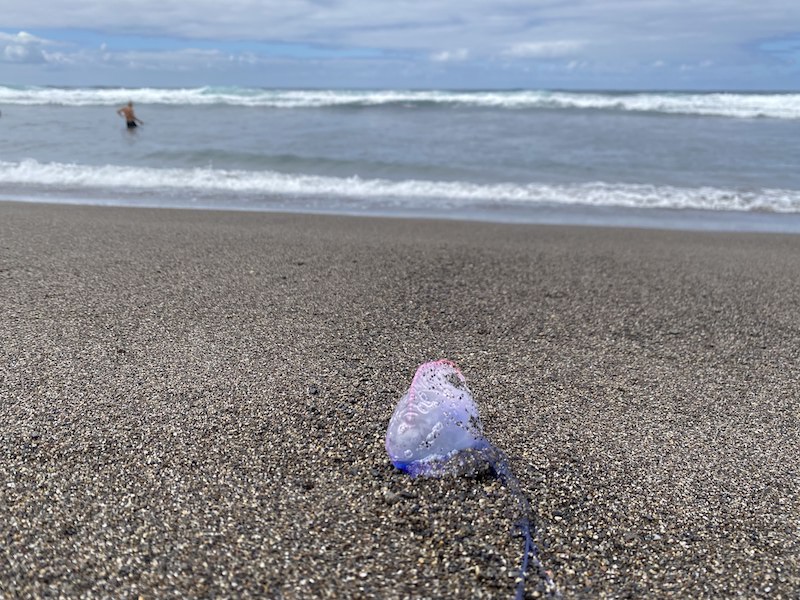
You may see purple, balloon-like creatures in the sea or washed up on Azorean beaches. These are Portuguese man o’ war, Physalia physalis, known locally as caravela-portuguesa. Their tentacles can reach 30 metres, and stings can be very painful. If you spot one in the water, stay out and follow the beach flags and lifeguard’s instructions.
Don’t touch one washed up on the beach either: the tentacles can still sting on the sand. We encountered them at Santa Bárbara during our stay. Decide whether to swim based on the lifeguard’s current advice, rather than assuming it’s fine because other people are in the water. Conditions can be different from one beach or day to the next.
More of Portugal: Lisbon: my three-day itinerary, food and where to stay.
Azores travel FAQs
When is the best time to visit the Azores?
July to September generally offers the most settled weather, but this is also peak season, with higher accommodation and car-hire prices. Spring and autumn can cost less; expect changeable conditions throughout the day.
How many days do you need in the Azores?
I recommend at least seven days for São Miguel alone. With ten to fourteen days you could add Pico and Faial, or Terceira. I would not try to fit all nine islands into one holiday.
Do you need a car on São Miguel?
A car is the most practical option for lakes, viewpoints, hot springs and beaches. Without one, stay in Ponta Delgada and combine buses with organised day tours.
Where is the best base on São Miguel?
With a car, the Ribeira Grande area worked well for us, with convenient drives in both directions. Without a car, choose Ponta Delgada. For peace and nature, look at Nordeste; for time by the sea, try São Roque or Vila Franca do Campo.
Do ferries connect all the Azores islands?
Not throughout the year, and not with the same frequency. The easiest ferry trips are between Pico, Faial and São Jorge. From São Miguel, flying is generally more practical. Check current routes with Atlânticoline.
Can you fly directly to the Azores from the UK or the US?
British Airways serves Ponta Delgada from London Heathrow seasonally. From the US, check Azores Airlines from Boston and New York JFK, plus seasonal United flights from Newark. Availability depends on your dates, and a route sold by an airline may include a connection.
When should you book whale watching?
Book early in peak season to secure your preferred time and type of boat. Plan it towards the start of your stay so there is room to rearrange if weather causes a cancellation.
Why visit the Azores?
For volcanic landscapes, green craters, hot springs, the ocean and whale watching. São Miguel brings most of those experiences together on one island.
How many islands are in the Azores?
There are nine: São Miguel, Santa Maria, Terceira, Graciosa, São Jorge, Pico, Faial, Flores and Corvo.

Read next: Lisbon · Tenerife · Fuerteventura · Malta · November beach holidays

I started travelling after finishing secondary school in 2005. Since then, I have studied in New Zealand and lived in Malta, Madeira, Brittany and Porto. I speak English and French, some Portuguese and very basic Chinese. I travel with hand luggage only and used to stay through Couchsurfing; these days, I use HomeExchange. I travel with my two children. Professionally, I am an agile coach, and I also perform improvisational theatre. Read more about me and my work as a Czech travel influencer.